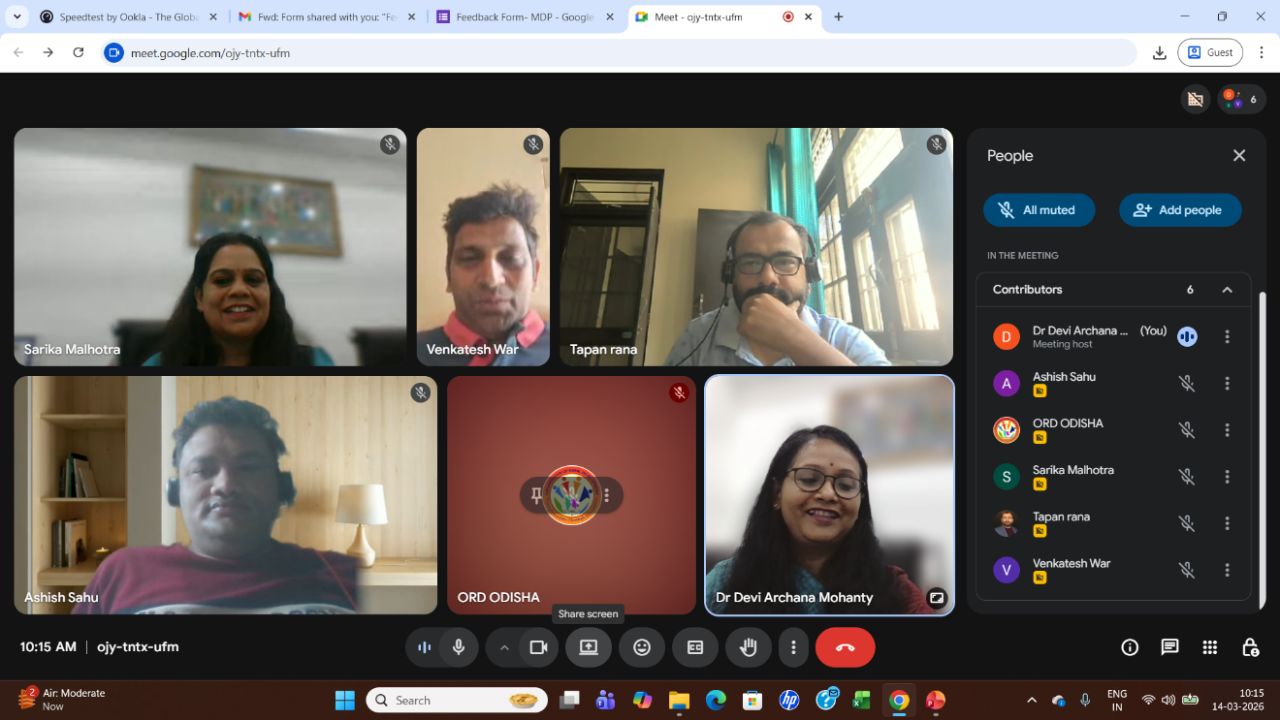
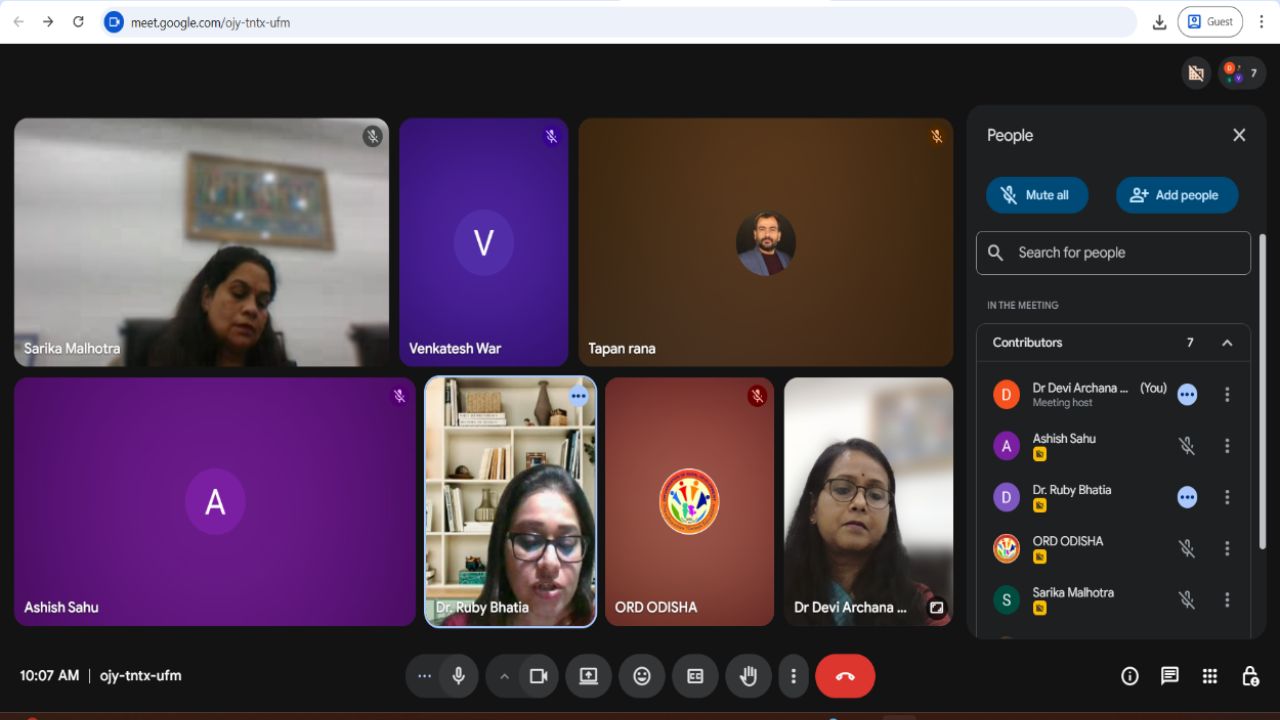
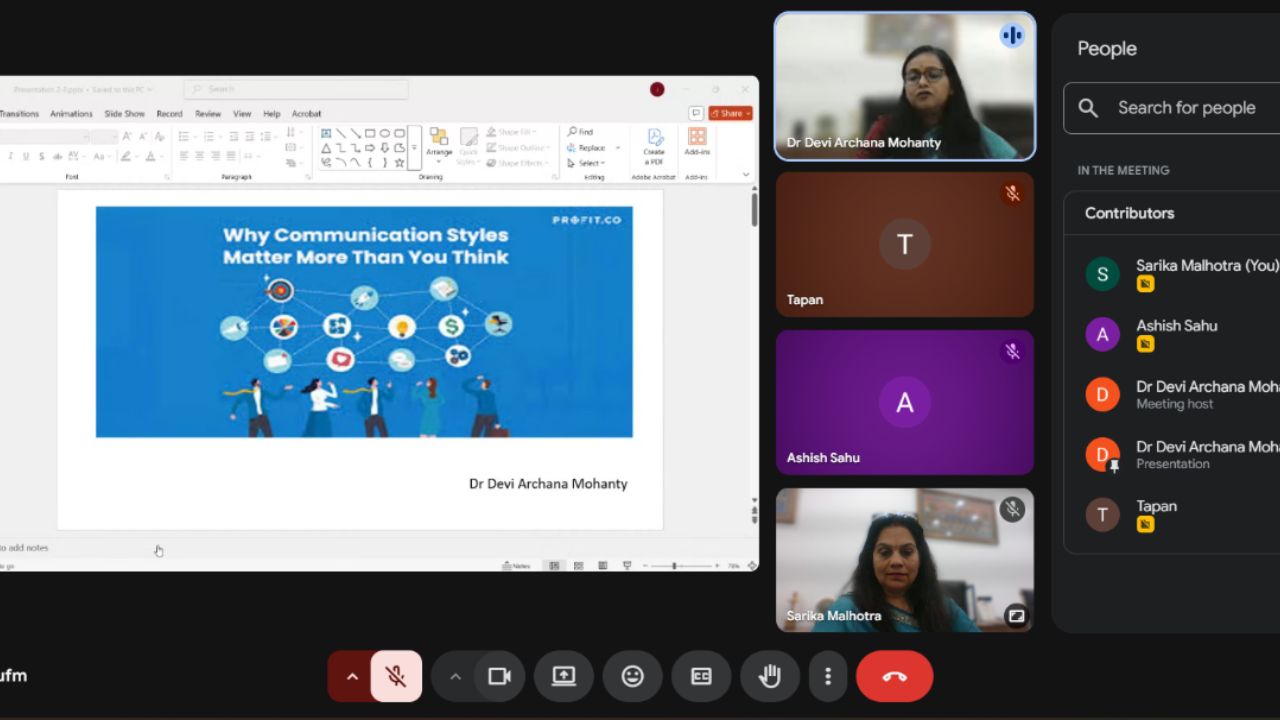
Leadership in the modern business world requires far more than technical knowledge and managerial expertise. Effective leaders must communicate with clarity, empathy, and influence while navigating complex and fast changing professional environments. Recognizing this growing need, Jaipuria Institute of Management Ghaziabad organized a Management Development Programme (MDP) titled Empowering Leaders through Communication Potentials: Mastering the Art of Influence in the AI Age.
The programme was conducted on Saturday, 14 March 2026, in virtual mode, bringing together working professionals from diverse organizations for an intensive learning experience focused on leadership communication, emotional intelligence, and the role of artificial intelligence in professional communication.
The MDP aimed to equip participants with practical frameworks and communication strategies that enable leaders to inspire teams, strengthen professional relationships, and influence organizational outcomes.
Focus of the Management Development Programme
In contemporary organizations, communication is one of the most critical competencies for leadership success. Leaders are expected to communicate vision, manage teams, resolve conflicts, and guide organizations through uncertainty.
The Management Development Programme was designed to address these requirements by focusing on:
- Enhancing leadership communication capabilities
- Developing emotional intelligence for interpersonal effectiveness
- Understanding modern leadership communication in complex environments
- Exploring the use of AI tools for professional communication
- Building persuasive and influential communication skills
Through a structured set of sessions, participants explored how communication skills directly impact leadership effectiveness, team collaboration, and organizational performance.
Expert Resource Persons Leading the Programme
The sessions were conducted by experienced faculty members from Jaipuria Institute of Management Ghaziabad:
- Dr. Devi Archana Mohanty, Associate Professor
- Ms. Sarika Malhotra, Assistant Professor
Both resource persons brought strong academic expertise and practical insights into leadership communication and organizational behaviour. Their sessions combined theoretical frameworks with practical exercises to ensure meaningful learning outcomes for participants.
Participants from various organizations joined the programme, creating an interactive environment for discussion, professional networking, and exchange of ideas.
Welcome Address and Programme Inauguration
The programme began with a welcome address by Prof. Dr. Ruby Bhatia, Dean Academics, who greeted the participants and highlighted the importance of leadership communication in modern organizations.
She emphasized that communication is no longer limited to transmitting information. Instead, it has evolved into a strategic leadership capability that enables professionals to motivate teams, build trust, and create strong organizational cultures.
She also spoke about the significance of industry academia collaboration in professional development initiatives such as Management Development Programmes. These initiatives help bridge the gap between academic knowledge and corporate practice while encouraging lifelong learning among professionals.
Session One: Leadership Communication in a BANI World
The first session, conducted by Dr. Devi Archana Mohanty, focused on communication as a core leadership capability in today’s uncertain business environment.
The discussion was framed around the concept of the BANI world, which represents environments that are brittle, anxious, non linear, and incomprehensible. Leaders operating in such conditions must communicate with clarity and emotional awareness to guide their teams effectively.
Through case discussions, reflective exercises, and real world examples, participants explored:
- The role of communication in influencing team performance
- How leaders can use communication to manage uncertainty
- The importance of clarity and empathy in leadership messaging
- Strategies for building trust through effective communication
The session highlighted how leaders must adapt their communication styles to address challenges in complex and evolving business environments.
Session Two: Self Awareness and Emotional Intelligence
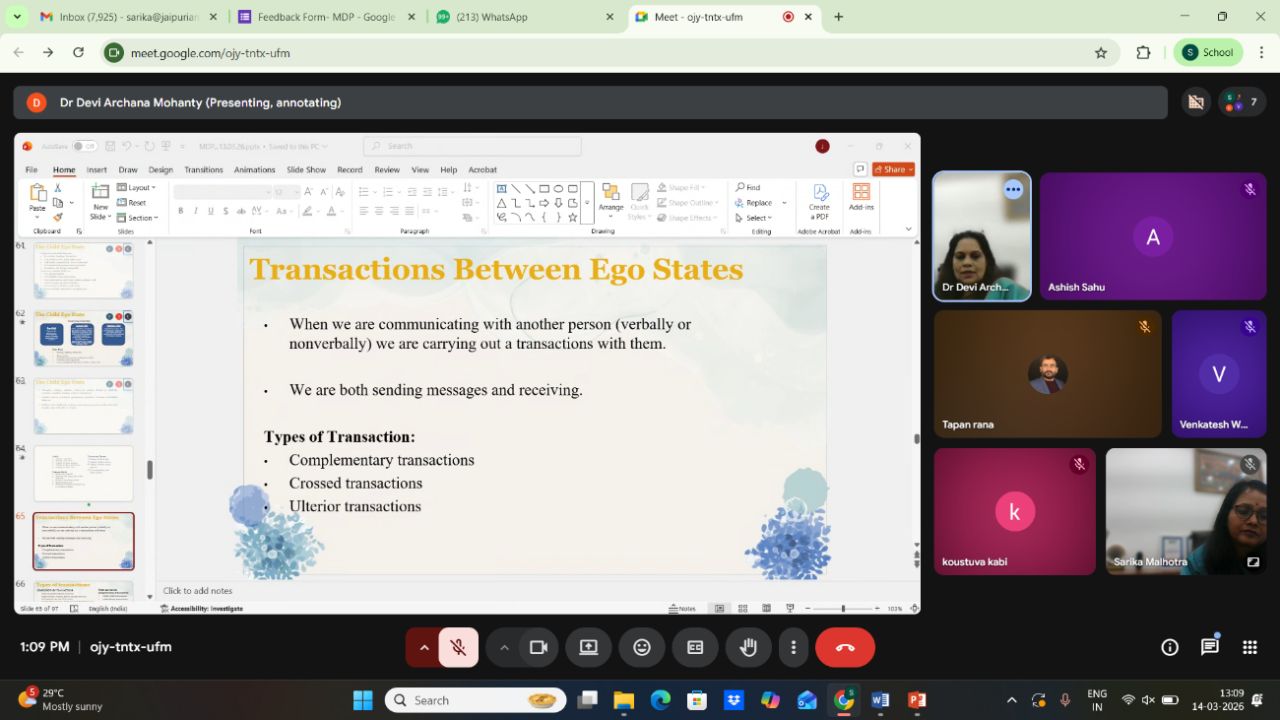
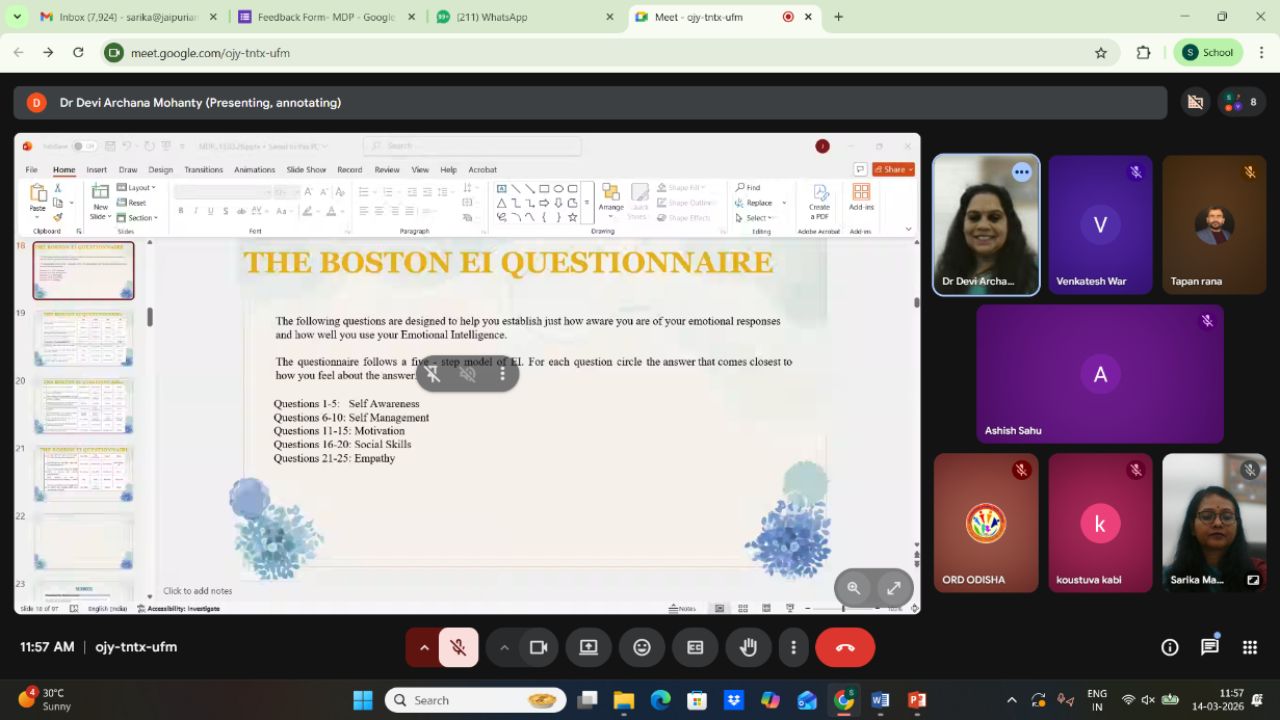
The second session, conducted by Ms. Sarika Malhotra, explored the role of self awareness and emotional intelligence in interpersonal communication.
Participants were introduced to behavioural frameworks such as Transactional Analysis and the Johari Window, which help individuals understand interpersonal dynamics and personal communication styles.
Through interactive discussions and exercises, participants reflected on:
- Their personal communication patterns
- The impact of emotional intelligence on professional relationships
- The importance of self awareness in leadership communication
- Ways to strengthen trust and collaboration in teams
These frameworks helped participants develop deeper insights into how their behaviour and communication approaches influence workplace interactions.
Session Three: Persuasive and Influential Communication
The third session focused on developing persuasive, assertive, and influential communication capabilities.
Participants engaged in quizzes, discussions, and scenario based activities to understand how communication styles affect decision making and influence within organizations.
Key themes covered in the session included:
- Persuasive communication techniques for leaders
- Assertive communication in professional environments
- Building influence through clarity and credibility
- Adapting communication styles for different audiences
The session also introduced participants to AI enabled tools for professional communication. These tools can assist professionals in improving writing clarity, structuring messages, and enhancing the effectiveness of workplace communication.
Participants learned how technology can support communication efficiency while maintaining authenticity and professionalism.
Learning Methodology and Participant Engagement
The Management Development Programme was designed using an interactive and experiential learning approach. Instead of relying solely on lectures, the sessions incorporated multiple learning formats to encourage active participation.
The methodology included:
- Conceptual discussions on leadership communication frameworks
- Case studies and real world examples
- Interactive exercises and quizzes
- Reflective learning activities
- Demonstrations of AI communication tools
This blended learning approach helped participants connect theoretical concepts with practical workplace applications.
Participants actively contributed to discussions, shared experiences from their professional roles, and engaged in collaborative learning activities throughout the programme.
Feedback and Reflections from Participants
The programme concluded with a valedictory session in which participants shared their feedback and reflections on the learning experience.
Participants appreciated the interactive nature of the programme and the practical insights shared during the sessions. Many highlighted that the discussions on emotional intelligence, leadership communication, and AI assisted communication tools were particularly relevant to their professional roles.
Several participants expressed interest in attending similar Management Development Programmes in the future, especially those focused on leadership development, workplace communication, and organizational effectiveness.
The positive response from participants reinforced the value of such programmes in supporting continuous professional development.
Strengthening Leadership Skills through Professional Development
Management Development Programmes play a vital role in enhancing the capabilities of professionals and leaders. In rapidly evolving business environments, continuous learning is essential for individuals seeking to remain effective and relevant in their roles.
Through initiatives like this MDP, Jaipuria Institute of Management Ghaziabad contributes to the professional growth of working executives by offering opportunities to develop leadership competencies and strategic thinking skills.
Such programmes also strengthen collaboration between industry and academia, enabling institutions to deliver learning experiences that are closely aligned with real world business challenges.
The Management Development Programme titled Empowering Leaders through Communication Potentials: Mastering the Art of Influence in the AI Age proved to be a meaningful learning experience for all participants.
By integrating leadership communication frameworks with behavioural insights and modern AI enabled tools, the programme equipped participants with strategies to communicate more effectively, influence organizational outcomes, and build stronger professional relationships.
The initiative reflects the continued commitment of Jaipuria Institute of Management Ghaziabad to promoting leadership development, professional excellence, and meaningful engagement with industry professionals.
Participants were informed that their MDP certificates would be issued within one week, marking the successful completion of the programme.