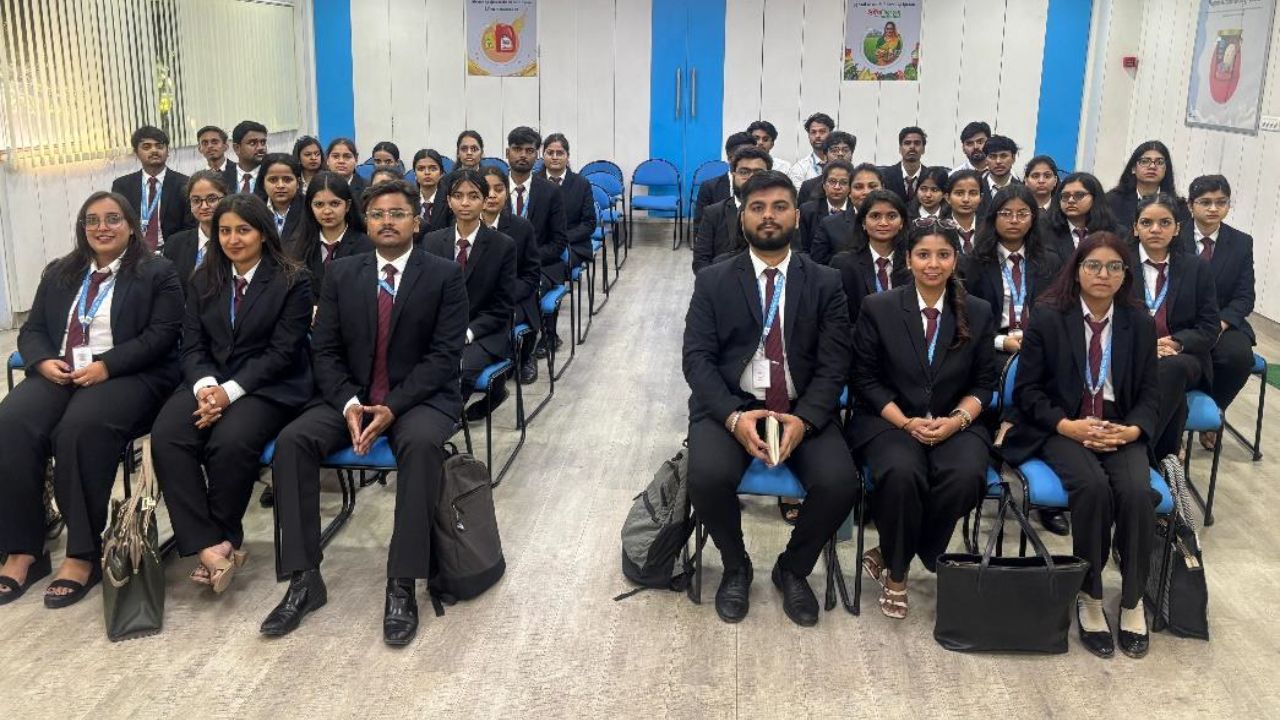
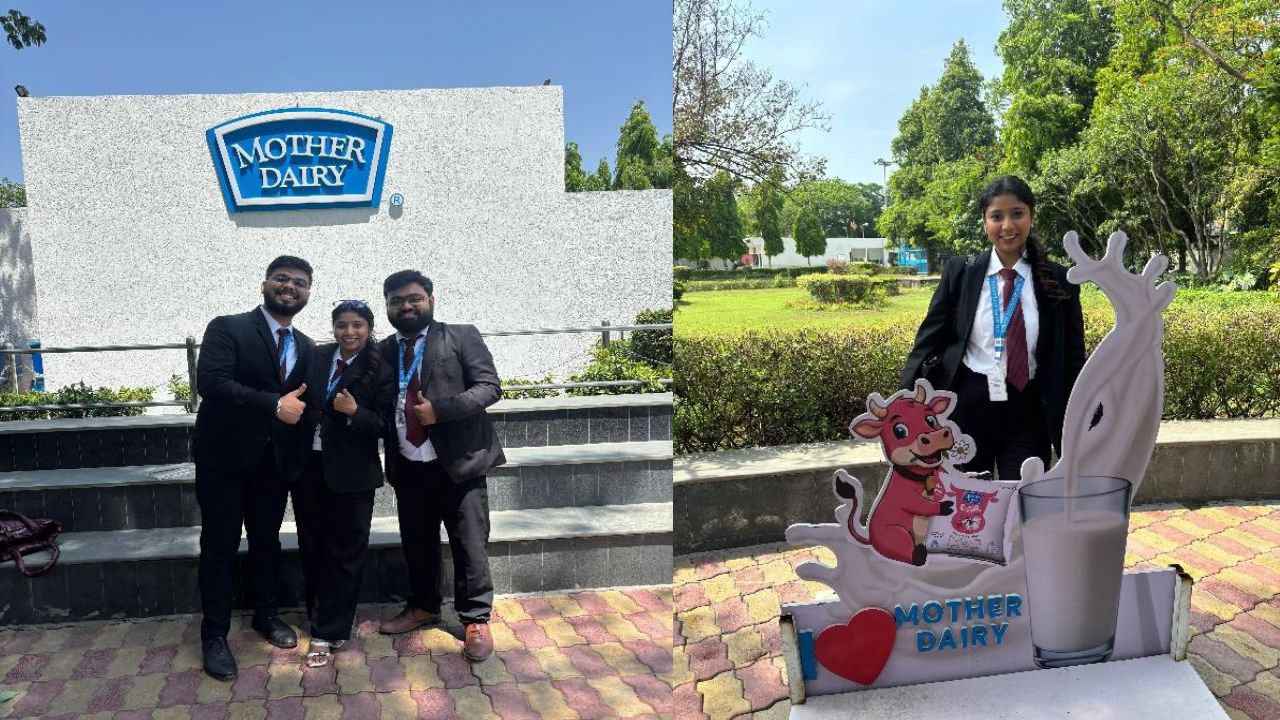
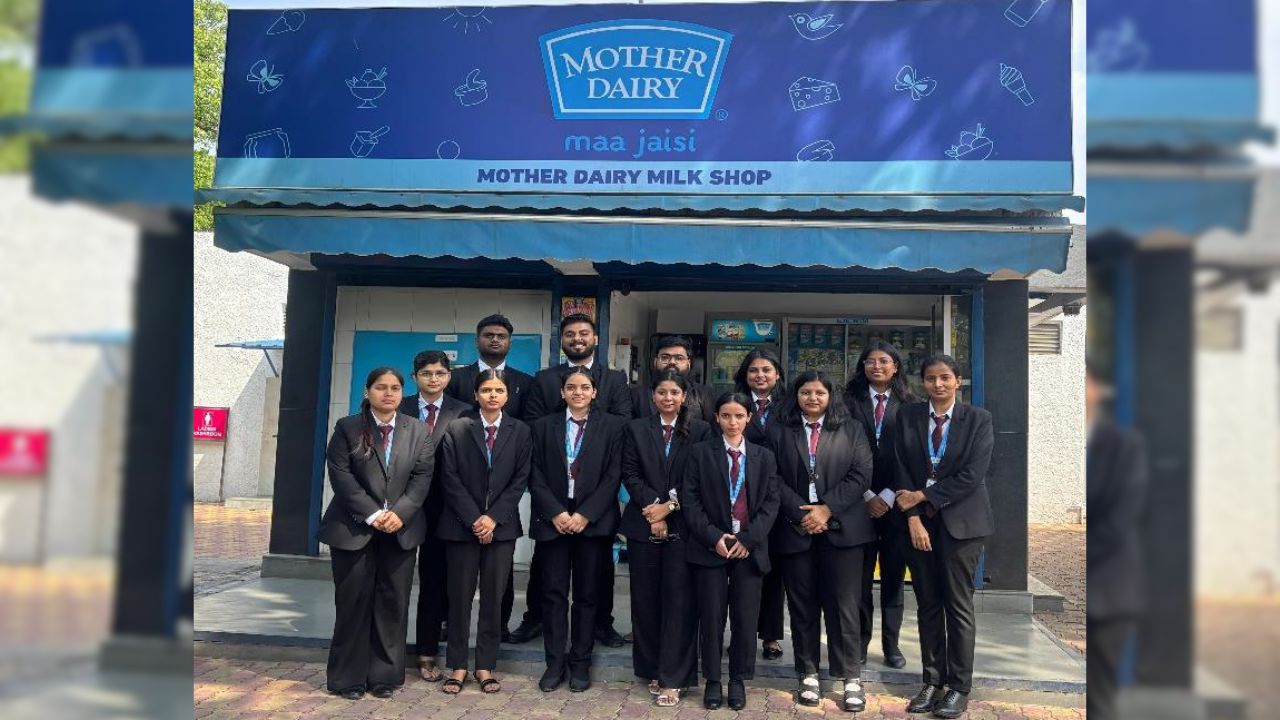
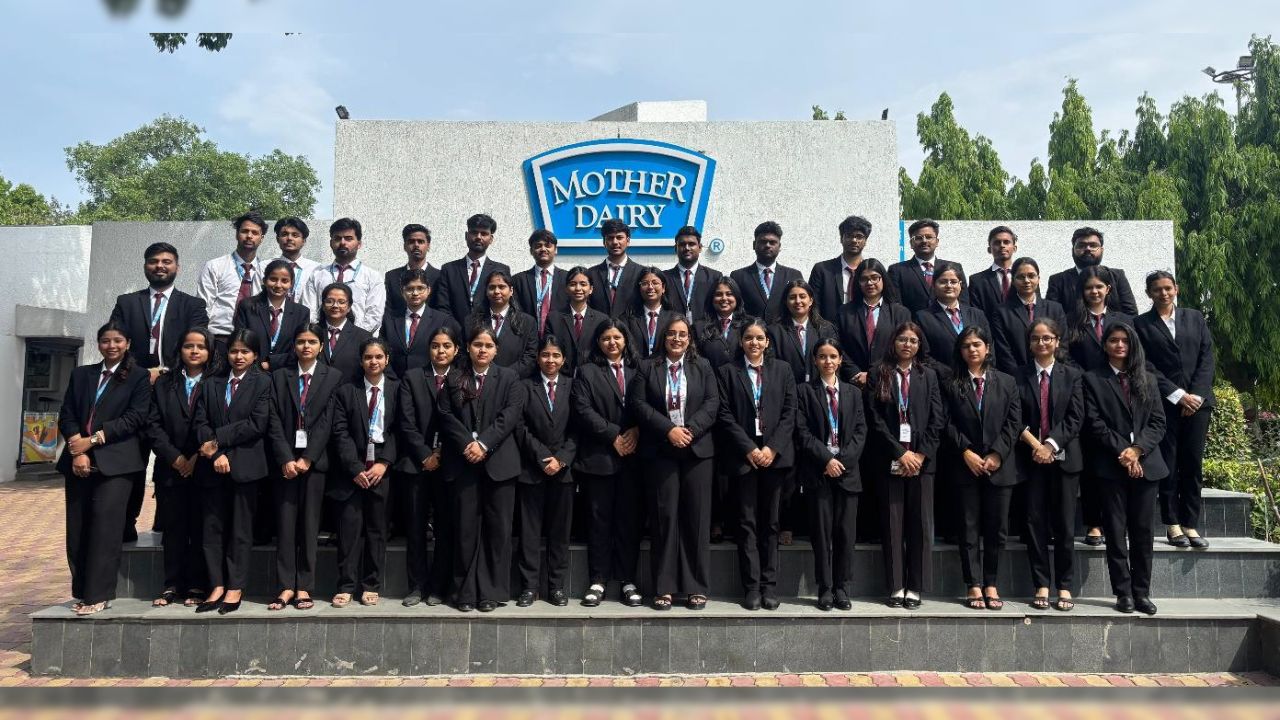
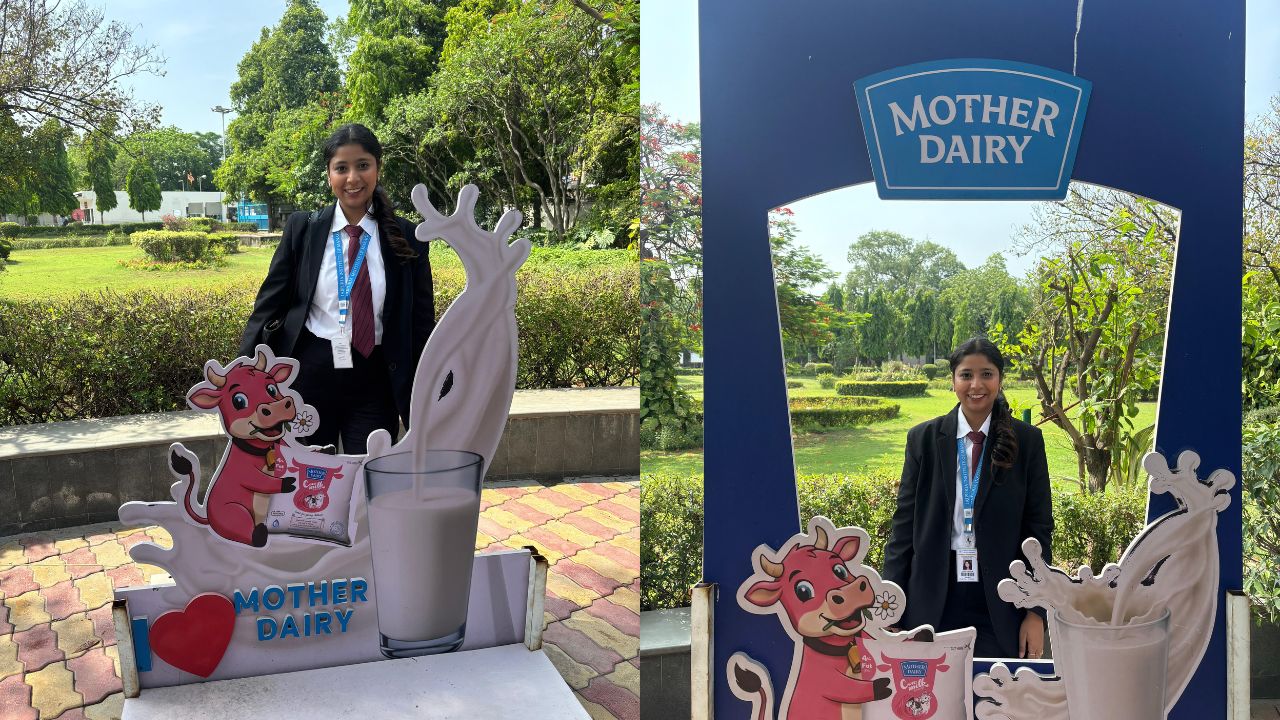
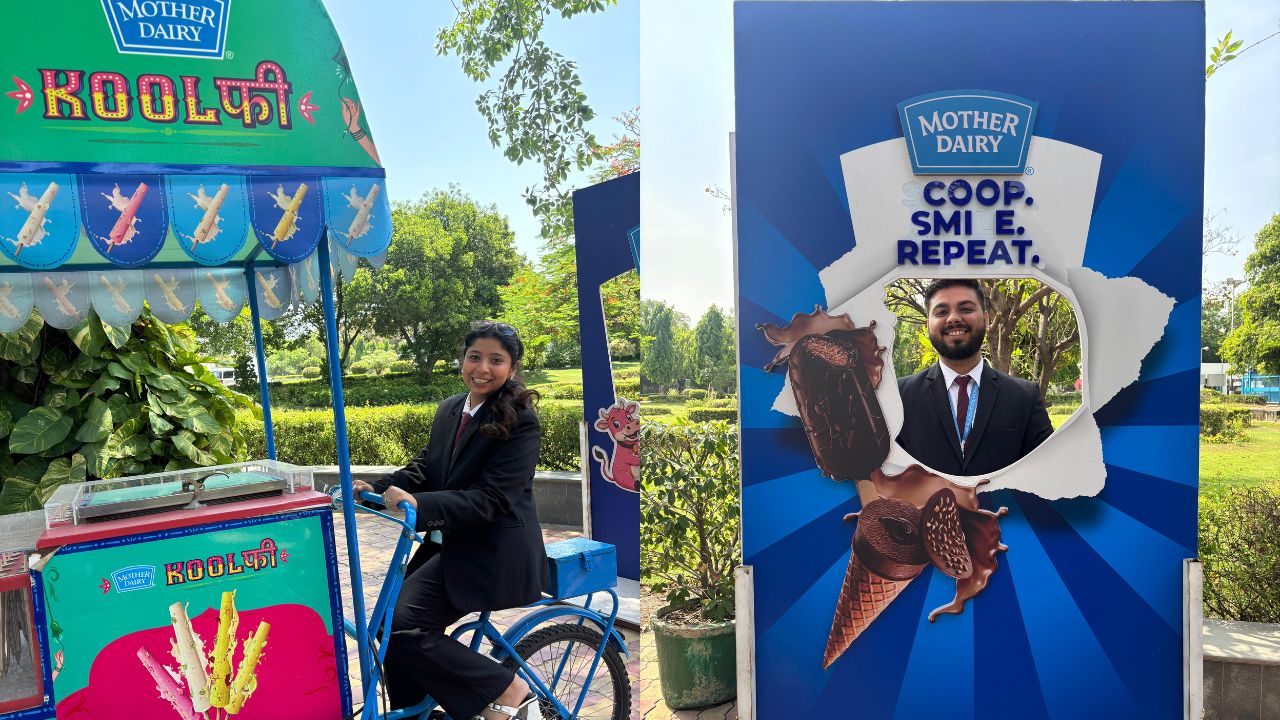
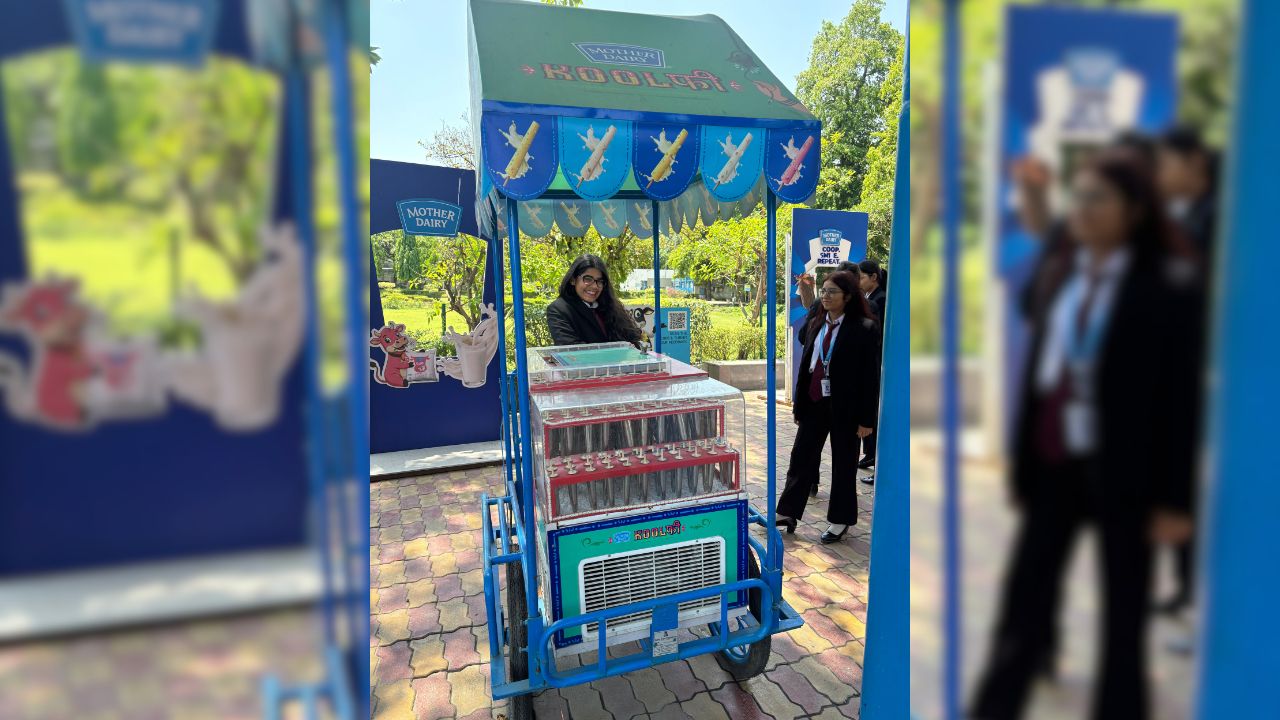
At Jaipuria Institute of Management, Ghaziabad, learning is designed to go beyond classrooms and textbooks. One of the most effective ways to achieve this is through industrial visits that connect theoretical knowledge with real world business operations. On 04 May 2026, MBA students of the 2025–27 batch visited Mother Dairy, one of India’s leading dairy and food processing organizations, to gain hands on exposure to large scale operations.
A total of 43 students participated in the visit, accompanied by faculty members, making it a well coordinated and immersive learning experience.
Understanding the Legacy of Mother Dairy
Before stepping into the operational side, it is important to understand the scale and significance of the organization. Mother Dairy was established in 1974 under the National Dairy Development Board as part of India’s Operation Flood initiative. It played a key role in strengthening the country’s dairy infrastructure and supporting the White Revolution.
Today, the company offers a wide range of products including milk, curd, butter, ghee, ice cream, and fresh produce under the Safal brand. Its operations represent a strong example of how supply chain efficiency and quality control drive success in the food and dairy sector.
Objective of the Industrial Visit
The visit was designed with clear learning goals. Students were expected to observe, understand, and analyze how a large scale dairy operation functions in real time.
The key objectives included gaining practical exposure to milk processing and distribution, understanding quality control systems, observing modern machinery, and learning how supply chain management works for perishable goods.
This approach reflects the institute’s emphasis on experiential learning, where students apply classroom concepts in real business environments .
Step by Step Process Observed at the Plant
The visit offered a detailed walkthrough of the complete dairy processing cycle. Students were able to observe each stage closely, which helped them connect operations management concepts with actual industry practices.
Milk Procurement: The journey begins at the grassroots level. Milk is collected from rural dairy farmers through cooperative societies. It is then transported to the processing plant in insulated tankers to maintain freshness and prevent contamination.
This stage highlighted the importance of rural supply networks and logistics planning.
Quality Testing: Once the milk reaches the plant, it undergoes strict quality checks. Students observed multiple testing procedures including fat content analysis, SNF measurement, and adulteration checks.
This step reinforced the importance of quality assurance in the food industry, where even minor lapses can impact consumer health and brand trust.
Pasteurization: Milk is heated to a controlled temperature and then rapidly cooled. This process eliminates harmful bacteria while preserving nutritional value.
Students learned how precise temperature control and timing are critical in maintaining product safety and quality.
Homogenization: In this stage, fat particles are evenly distributed throughout the milk. This improves texture, consistency, and taste.
It also demonstrated how technology enhances product quality and customer experience.
Packaging: The packaging process is fully automated and carried out under hygienic conditions. Different types of milk such as toned, double toned, and full cream are packaged using advanced machinery.
This stage gave students insights into automation and efficiency in production lines.
Storage and Distribution: Finally, the packaged milk is stored in cold storage facilities before being distributed through a well organized supply chain network.
Students observed how timely distribution is critical for perishable products and how cold chain logistics ensures freshness until the product reaches consumers.
Key Learnings from the Industrial Visit
The visit provided several important takeaways that are directly relevant to MBA students.
Importance of Quality Control: Students understood how strict quality standards are maintained at every stage of production. In industries like food and dairy, quality is non negotiable.
Role of Automation: The use of modern machinery and automated systems improves efficiency, reduces human error, and ensures consistency in production.
Supply Chain Management: Managing perishable goods requires precise coordination across procurement, storage, and distribution. The visit offered a clear understanding of how supply chains operate in real time.
Industry Relevance: Students gained exposure to how theoretical concepts such as operations management and logistics are applied in real business scenarios.
Economic Significance: The dairy industry plays a crucial role in India’s economy by supporting farmers, creating employment, and ensuring food security.
Bridging Classroom Learning with Industry Exposure
One of the biggest advantages of such visits is the ability to connect theory with practice. Concepts like production processes, quality management, and supply chain efficiency are often discussed in classrooms, but seeing them in action creates a deeper understanding.
At Jaipuria Institute of Management, Ghaziabad, industrial visits are an integral part of the MBA program. They ensure that students are not just academically prepared but also aware of how industries function on the ground.
Student Experience and Engagement
The visit was highly engaging for students. They actively observed processes, asked questions, and interacted with industry professionals. This interaction provided clarity on career opportunities in operations, supply chain, and the food processing sector.
The exposure also helped students understand the scale at which large organizations operate and the level of coordination required to maintain efficiency and quality.
The industrial visit to Mother Dairy proved to be a valuable learning experience for MBA students of Jaipuria Institute of Management, Ghaziabad. It offered practical insights into dairy processing, quality control, and supply chain management, helping students understand how large scale operations are managed efficiently.
More importantly, it reinforced the importance of experiential learning in management education. By stepping outside the classroom and into real industry environments, students gain a clearer perspective on how businesses operate and what it takes to succeed in professional roles.
Such initiatives continue to strengthen the institute’s commitment to developing industry ready professionals who can confidently apply their knowledge in real world scenarios.