
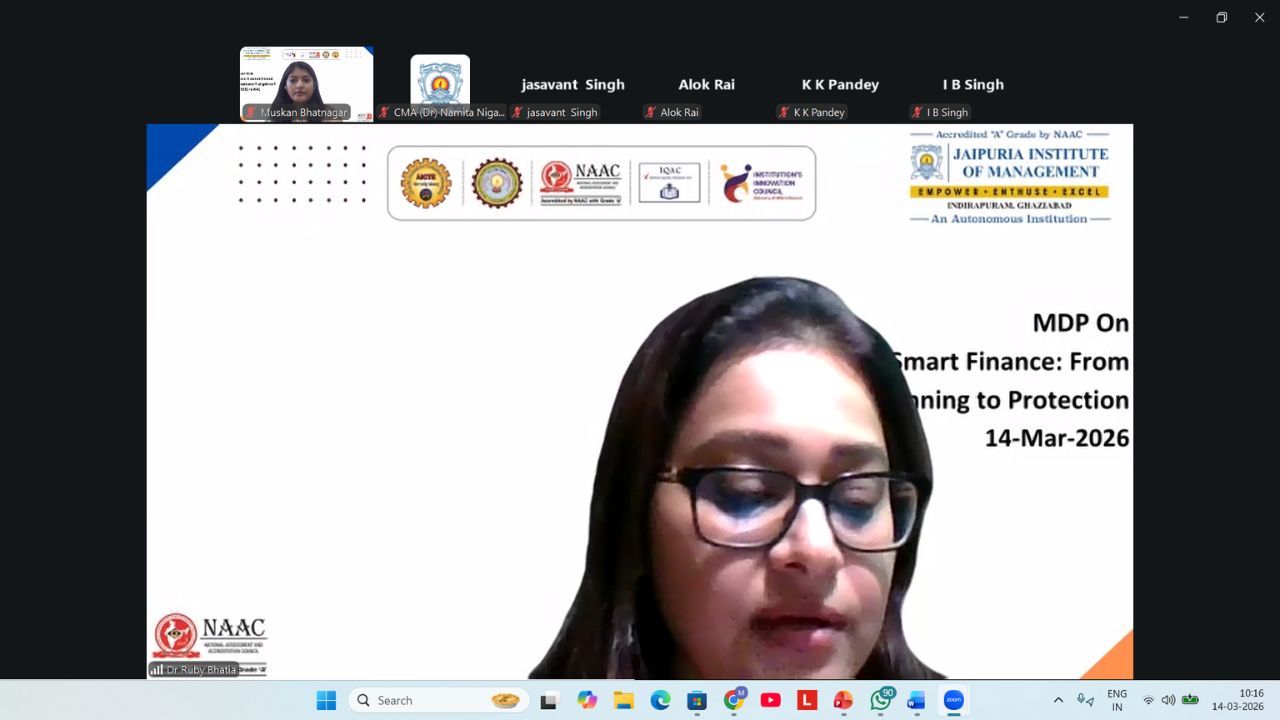
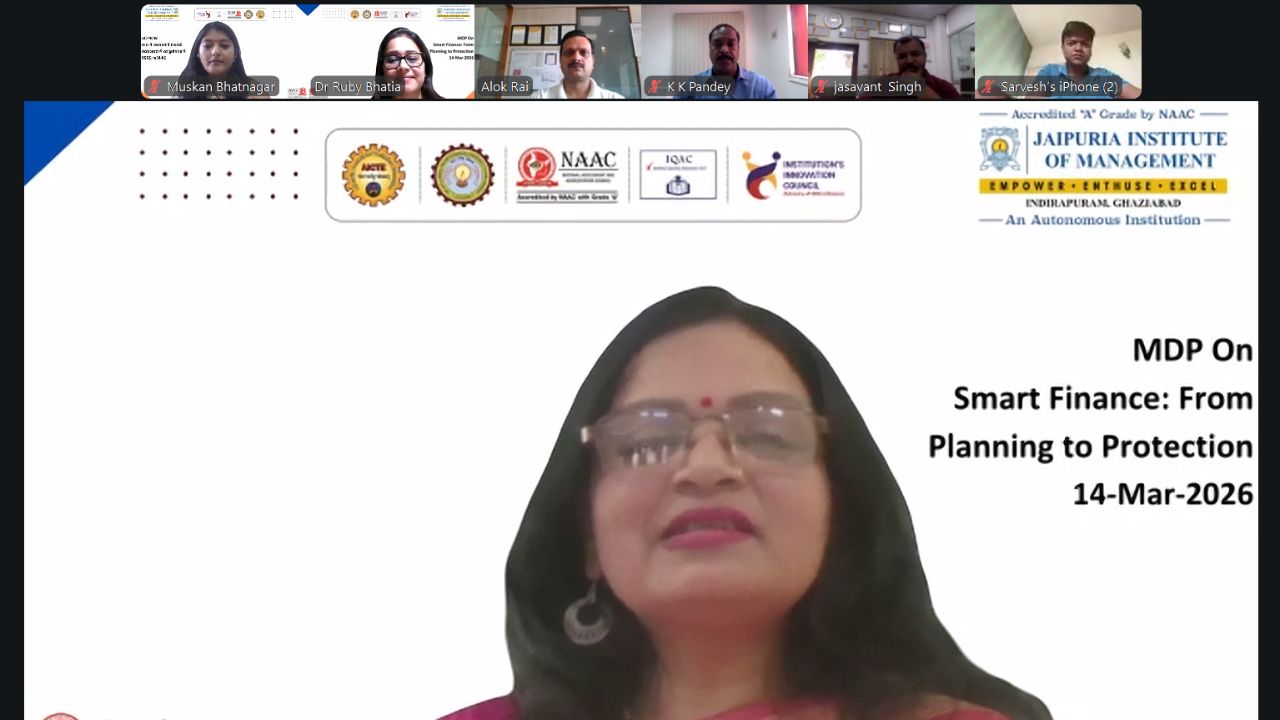
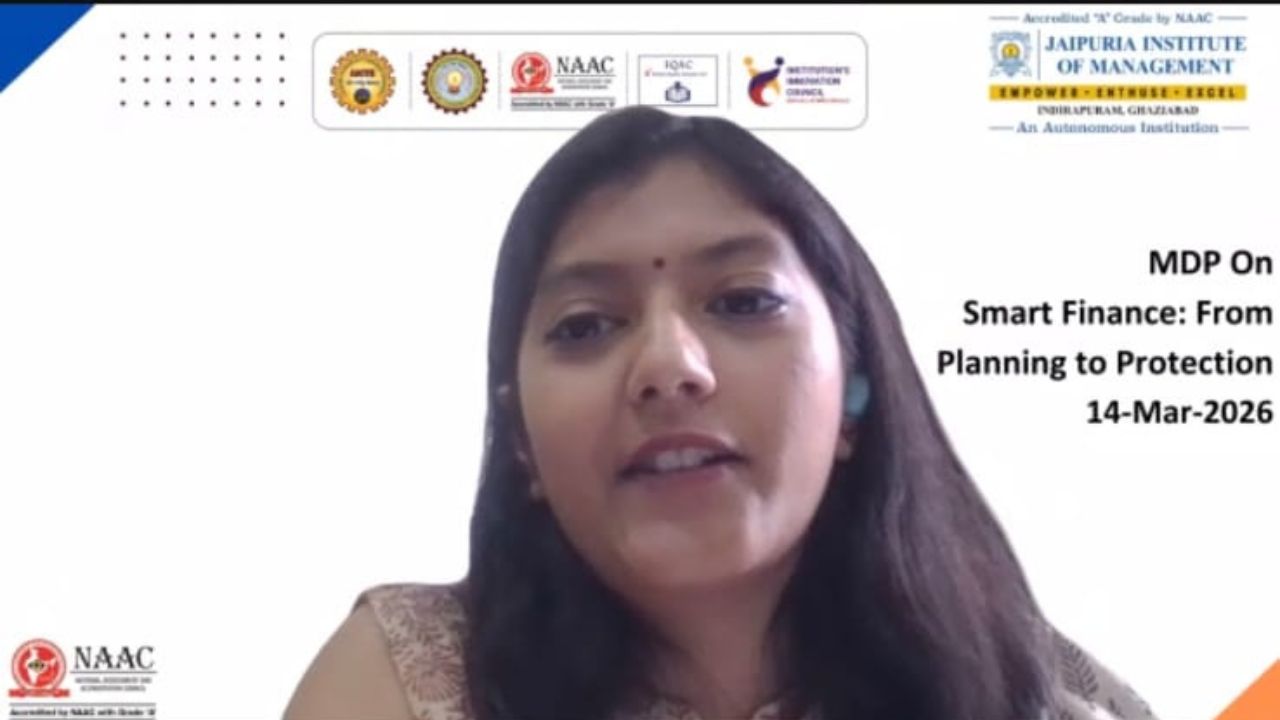
Financial decision making in the modern world requires both strategic planning and effective protection mechanisms. Professionals must not only focus on wealth creation through intelligent investments but also safeguard their financial assets from emerging cyber threats and financial fraud. Recognizing this need, Jaipuria Institute of Management Ghaziabad organized a Management Development Programme titled Smart Finance From Planning to Protection.
The programme was conducted on March 14, 2026, from 10:00 a.m. to 3:00 p.m. at Jaipuria Institute of Management, Indirapuram, Ghaziabad. The workshop was designed for industry professionals and brought together participants from diverse professional backgrounds who were interested in strengthening their financial planning and financial security capabilities.
The sessions were conducted by Dr. Namita Nigam and Dr. Muskan Bhatnagar, who facilitated the programme through an interactive learning format combining real world financial scenarios, digital demonstrations, and cyber security awareness exercises.
Objective of the Programme
The primary objective of the Management Development Programme was to empower professionals with the ability to manage both wealth creation and wealth protection in an increasingly digital financial environment.
The programme focused on enabling participants to move beyond traditional saving approaches and adopt more strategic, goal based financial planning practices. At the same time, it highlighted the growing importance of financial security and cyber hygiene in protecting investments.
The programme aimed to help participants:
- Shift from passive saving habits to goal based strategic investing.
- Understand complex financial instruments and taxation frameworks.
- Develop the ability to evaluate investment options using professional digital tools.
- Recognize financial risks and cyber threats affecting digital financial transactions.
- Build practical knowledge for protecting financial assets in the digital era.
Through this approach, the programme addressed both financial growth and financial protection as essential components of modern financial planning.
Interactive Workshop Approach
The programme was designed as an interactive workshop rather than a traditional lecture based session. This format ensured that participants actively engaged with real world financial situations and practical tools used by professionals in the investment industry.
The first half of the programme was led by Dr. Namita Nigam, who adopted a live case methodology to help participants understand financial planning concepts in practical contexts.
Instead of discussing financial planning only through theoretical examples, participants worked with real world scenarios and financial data to understand how investment decisions are made.
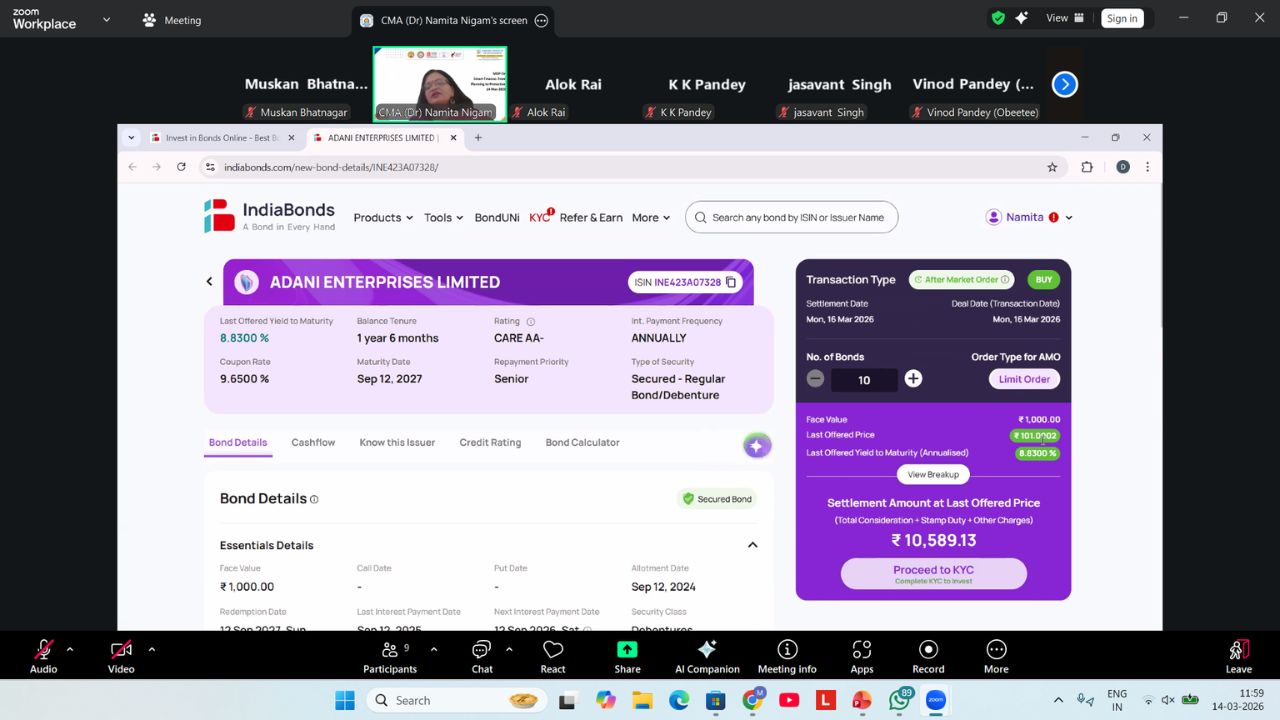
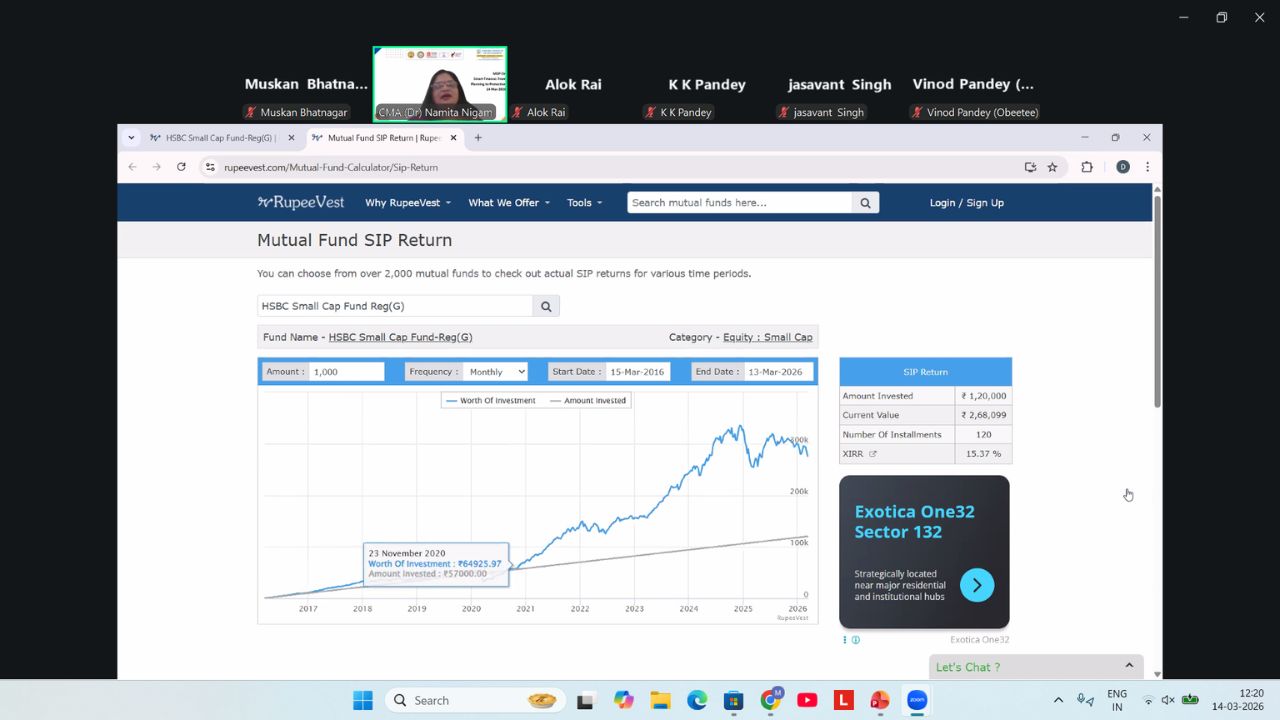
Dr. Nigam demonstrated the use of professional financial research platforms such as IndiaBonds and ValueResearchOnline. Through live demonstrations, participants learned how to analyse and evaluate different financial instruments using data driven metrics.
Participants explored how to:
- Evaluate bond seniority, credit ratings, and state guarantees.
- Analyse mutual fund performance and expense ratios.
- Understand risk adjusted returns for investment decisions.
- Interpret key investment indicators such as Yield to Maturity for bonds and Alpha and Beta values for mutual funds.
The session encouraged participants to shift from brand name investing to data driven investing, helping them make more informed financial decisions.
Core Financial Planning Concepts Covered
The programme covered several important concepts related to strategic financial planning and wealth management.
Goal Based Investing and Risk Profiling
Participants were introduced to the concept of goal based financial planning, which links financial investments to life goals such as housing, education, retirement planning, and family commitments.
Dr. Nigam emphasized an important principle during the session that retirement should not be viewed simply as an age but as a financial number that reflects an individual’s lifestyle and financial needs.
Participants learned how to map their financial goals against different risk profiles, including aggressive, moderate, and conservative investment approaches.
This approach helps individuals design financial strategies that align with their personal risk tolerance and long term objectives.
Investment Strategies through the S Trilogy
Another key topic discussed during the session was the use of systematic investment strategies commonly referred to as the S Trilogy, which includes:
- Systematic Investment Plans (SIP)
- Systematic Transfer Plans (STP)
- Systematic Withdrawal Plans (SWP)
Participants learned how these mechanisms work together to create disciplined and structured financial plans.
The session explained how SIP can support long term wealth accumulation, STP can help balance risk during investment transitions, and SWP can provide stable income streams during retirement.
Understanding these tools helped participants gain clarity on how structured investing can support both wealth creation and financial stability.
Tax Efficient Financial Planning
The programme also addressed the importance of tax efficiency in financial decision making.
Participants received insights into strategies for maximizing investment returns under both the old and new tax regimes. The discussion included examples of tax efficient asset classes and exemptions that can improve overall financial outcomes.
Special attention was given to the role of tax free bonds and other exempt income instruments, which can contribute to long term financial planning while minimizing tax liabilities.
By understanding the tax implications of different investments, participants were able to identify strategies for improving the efficiency of their financial portfolios.
Protecting Wealth through Cyber Financial Security
The second half of the programme focused on financial security and cyber hygiene, led by Dr. Muskan Bhatnagar.
In today’s digital financial ecosystem, financial transactions are increasingly conducted through online platforms, mobile applications, and digital payment systems. While these technologies offer convenience and efficiency, they also expose individuals to new financial risks and cyber threats.
Dr. Bhatnagar highlighted the critical reality that a single fraud incident can potentially erase years of disciplined financial planning and investment.
The session focused on developing awareness of financial risks and building practical knowledge for protecting digital financial assets.
Understanding Financial Risks and Fraud
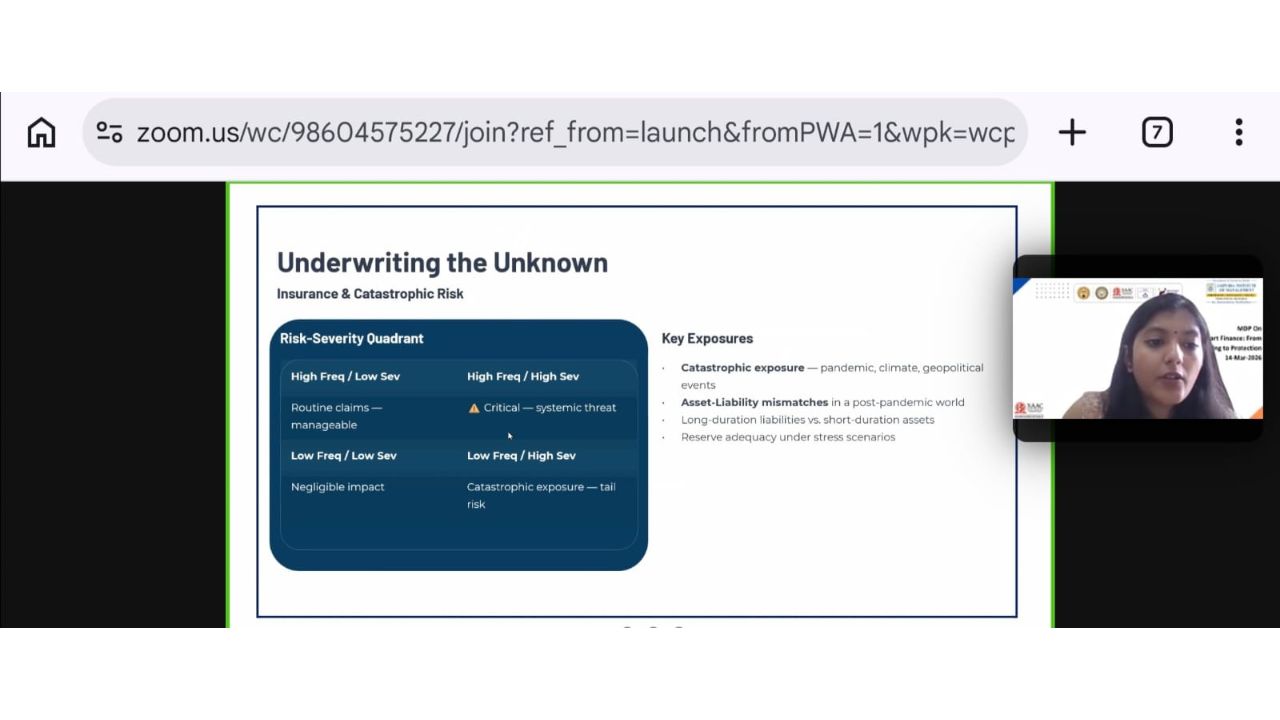
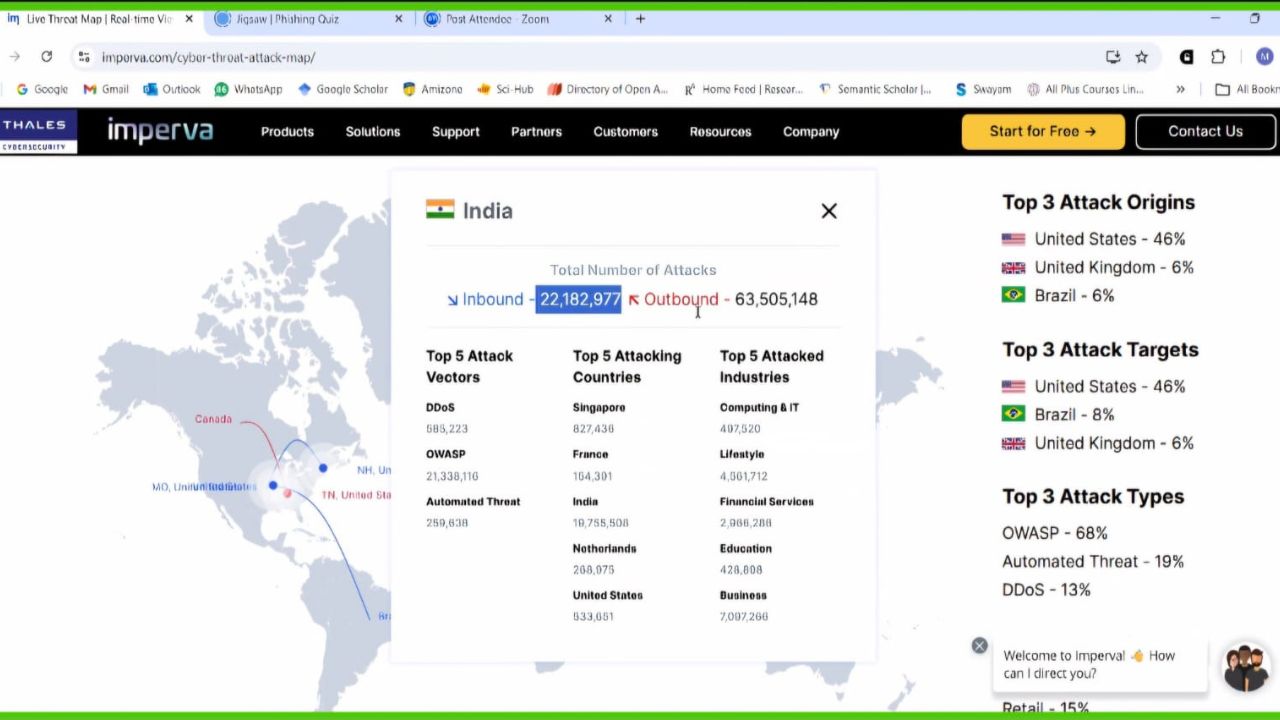
Participants were introduced to the evolving financial risk landscape affecting modern financial systems. The discussion included risks associated with banking services, investment platforms, insurance products, and digitally connected financial networks.
The session addressed various forms of financial fraud that individuals may encounter, including:
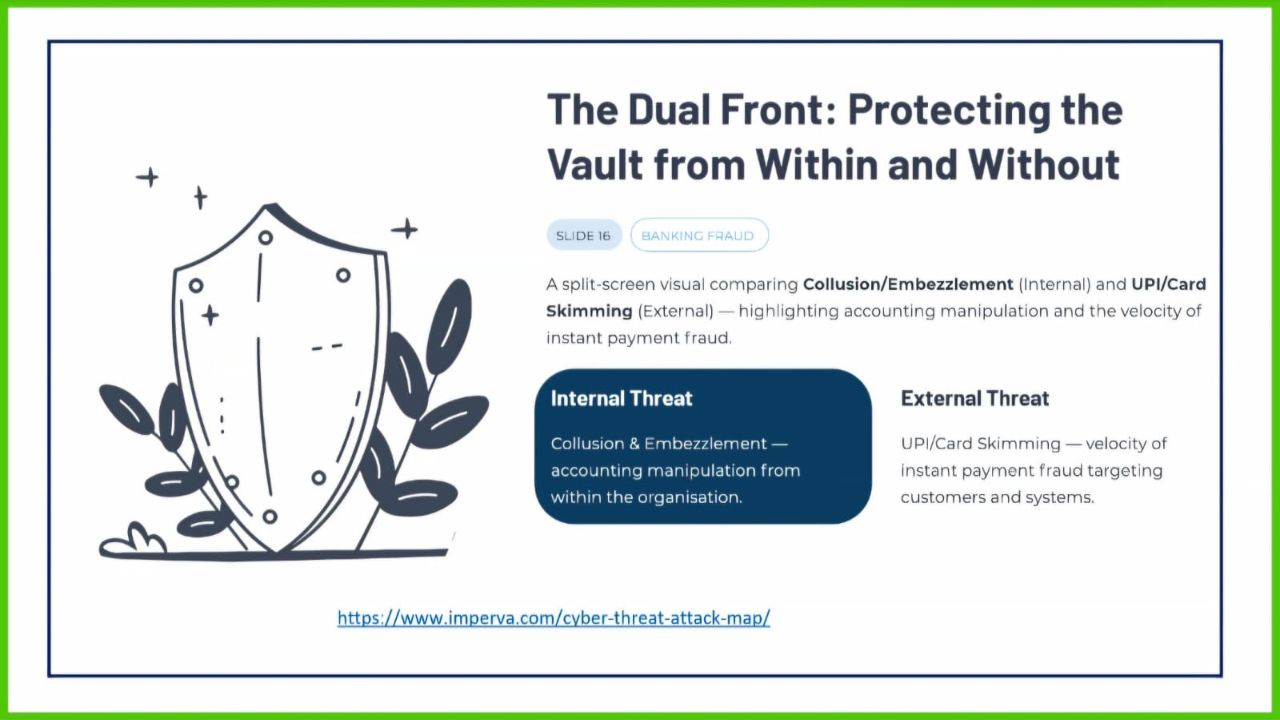
- Banking fraud and unauthorized transactions.
- Identity theft and personal data misuse.
- Social engineering attacks.
- Phishing attempts and fraudulent links.
- Investment scams such as Ponzi schemes and pump and dump manipulation.
Emerging threats such as deepfake fraud and synthetic identity manipulation were also discussed to highlight the growing sophistication of financial cybercrime.
Cyber Hygiene and Digital Self Defense
To help participants protect their financial assets, the session introduced the concept of digital self defense.
Participants were trained in practical cyber hygiene practices that reduce the risk of digital financial fraud.
These practices included:
- Using strong authentication mechanisms such as multi factor authentication.
- Securing financial applications and digital devices.
- Monitoring account activity for unusual login patterns.
- Recognizing suspicious communication attempts and phishing indicators.
- Maintaining secure network environments when conducting financial transactions.
The session emphasized that awareness and proactive security practices are essential for protecting digital financial ecosystems.
Fraud Detection and Response Strategies
The programme also highlighted behavioural and transactional warning signs that may indicate fraudulent activity.
Participants learned how to identify early indicators such as unusual login behaviour, unexpected financial transactions, and unauthorized access attempts.
In addition, a structured fraud response framework was introduced to help participants respond quickly in case of financial cyber incidents.
The framework included:
- Activating emergency account protection mechanisms.
- Contacting bank fraud response teams immediately.
- Preserving digital evidence for investigation.
- Reporting incidents through official cybercrime portals.
These response strategies help individuals minimize financial loss and improve the chances of recovering compromised funds.
Learning Outcomes of the Programme
By the end of the Management Development Programme, participants developed practical financial planning and security capabilities.
Participants were able to:
- Construct a structured personal financial roadmap aligned with life goals.
- Evaluate credit quality by distinguishing between different forms of debt instruments.
- Identify tax efficient investment strategies within current tax frameworks.
- Recognize warning signs of financial scams before financial assets are at risk.
- Implement cyber safety practices to secure their digital financial systems.
These outcomes ensured that participants could apply their learning directly in both personal and professional financial decision making.
Strengthening Professional Financial Awareness
Management Development Programmes like this play a vital role in enhancing the financial awareness and decision making capabilities of professionals.
By combining financial planning strategies with cyber security awareness, the programme addressed two critical aspects of modern finance: wealth creation and wealth protection.
Through such initiatives, Jaipuria Institute of Management Ghaziabad continues to support professional learning, industry engagement, and executive education.
These programmes create opportunities for professionals to upgrade their skills, understand evolving financial systems, and strengthen their decision making capabilities in complex economic environments.
The Management Development Programme titled Smart Finance From Planning to Protection provided industry professionals with valuable insights into modern financial planning and financial security.
The sessions led by Dr. Namita Nigam and Dr. Muskan Bhatnagar successfully combined practical financial strategies with awareness of digital financial risks. Participants gained a deeper understanding of investment evaluation, tax planning, cyber security practices, and fraud prevention strategies.
The programme concluded with participants gaining actionable knowledge that can support both their personal financial planning and professional financial decision making.
This initiative reflects the commitment of Jaipuria Institute of Management Ghaziabad to fostering continuous learning, professional excellence, and industry oriented education.