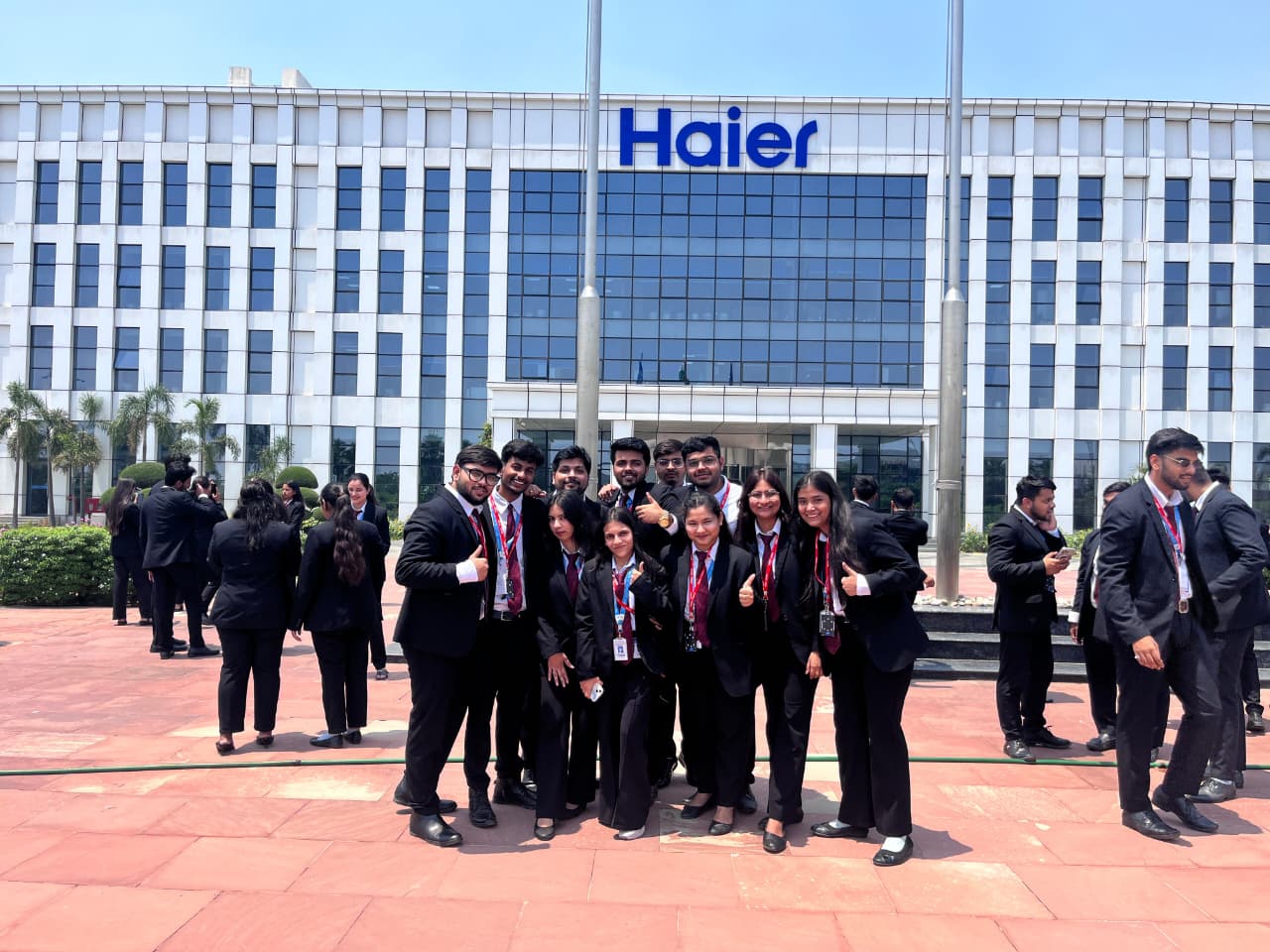
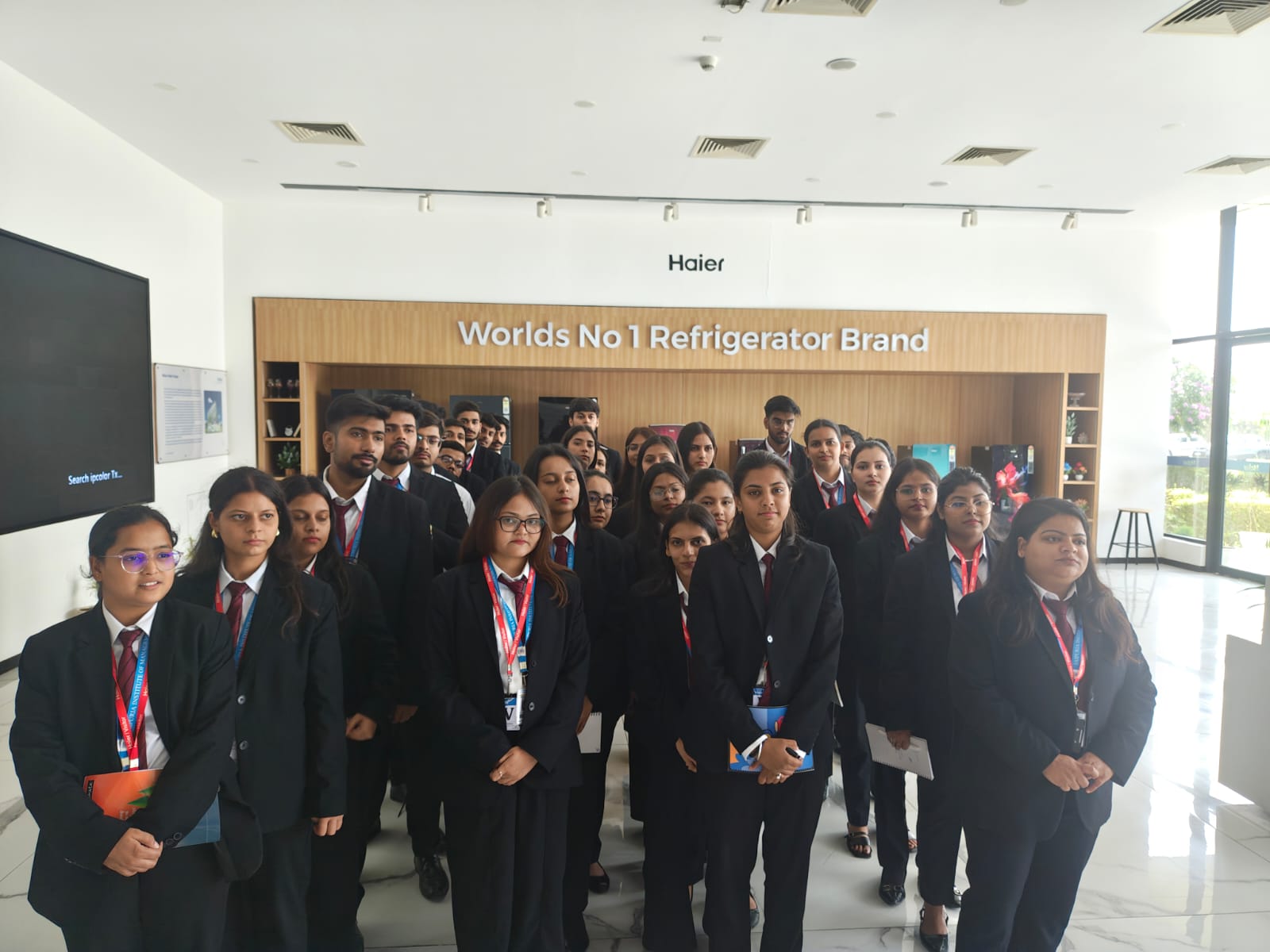
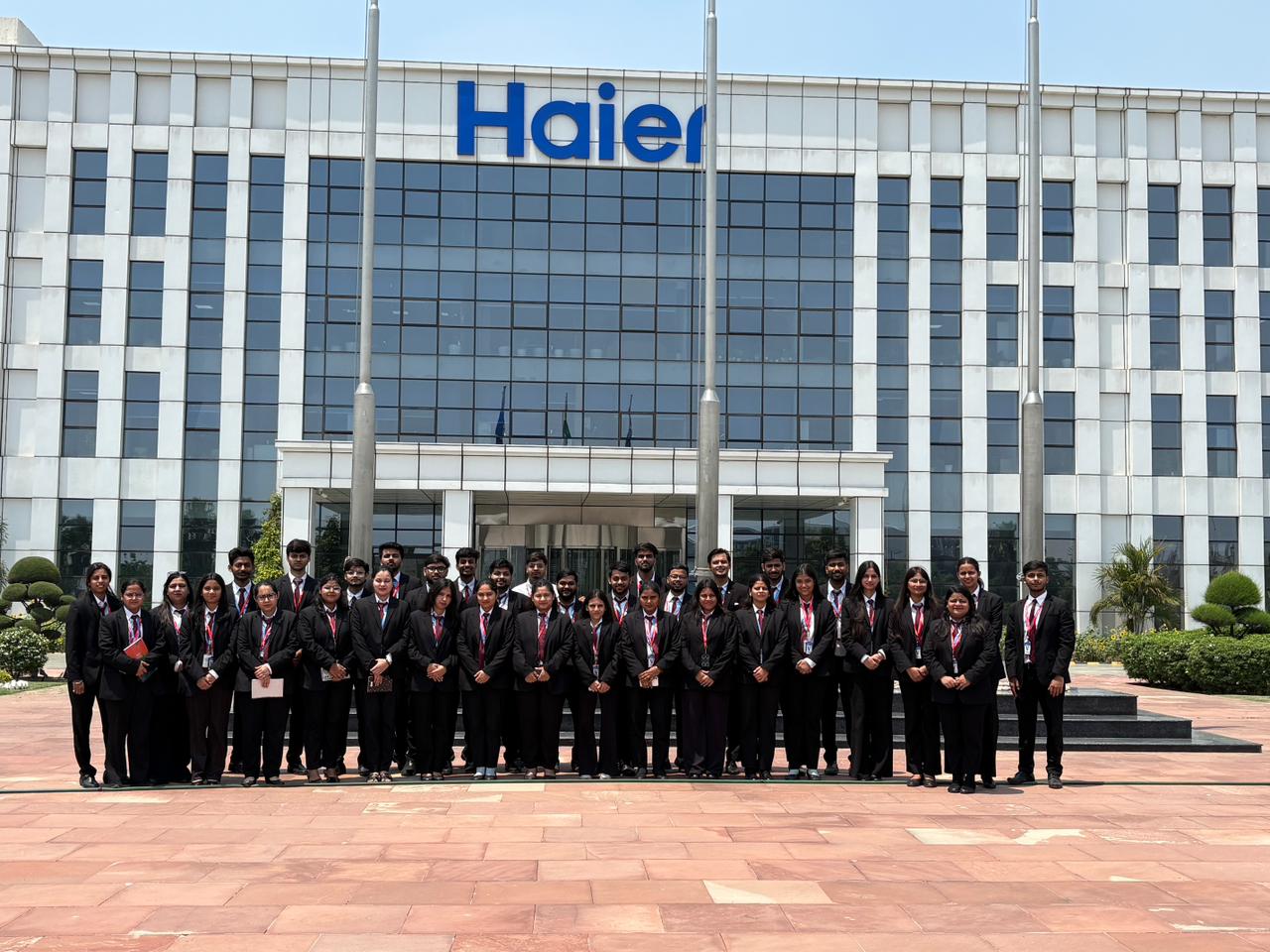
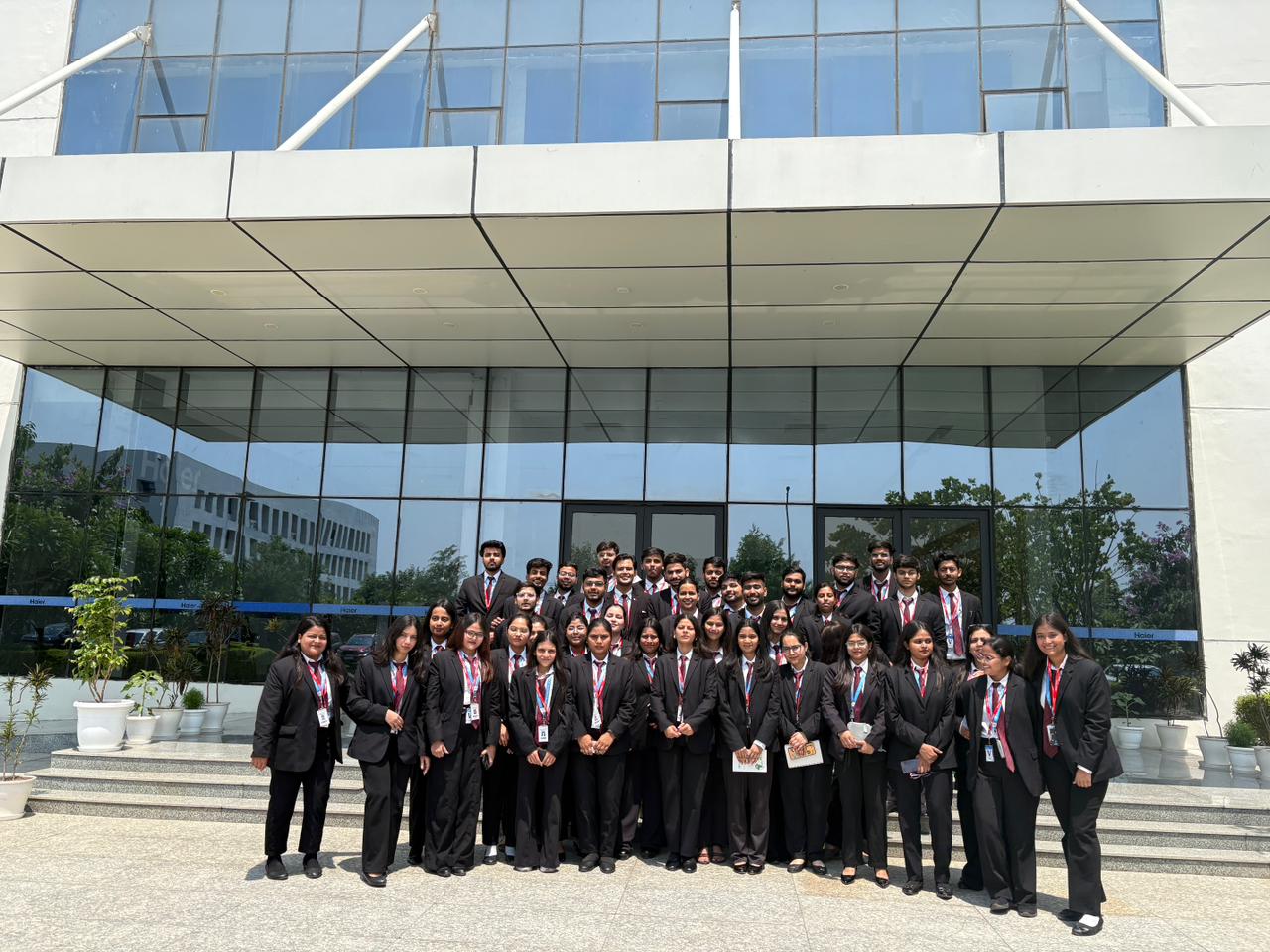
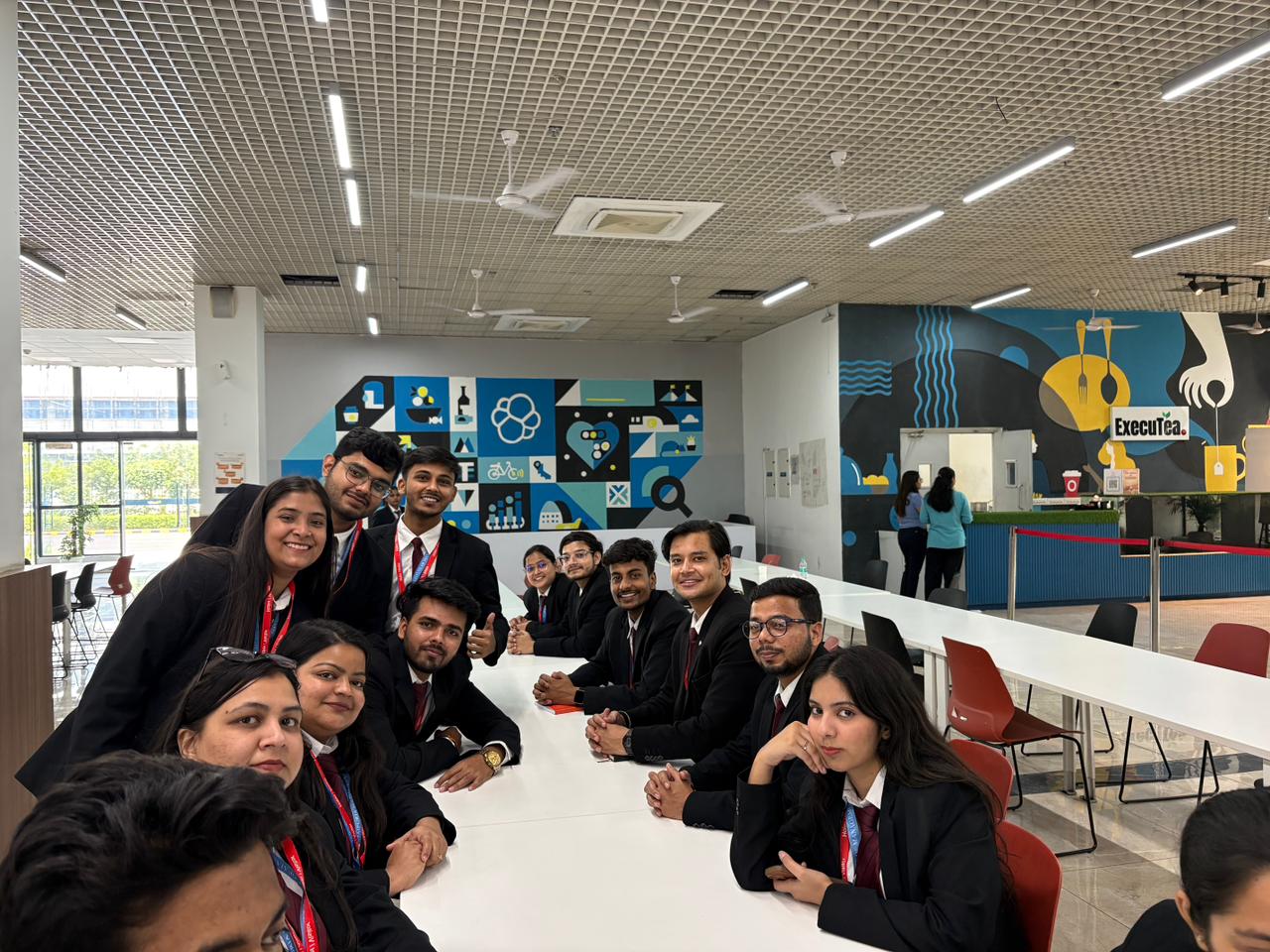
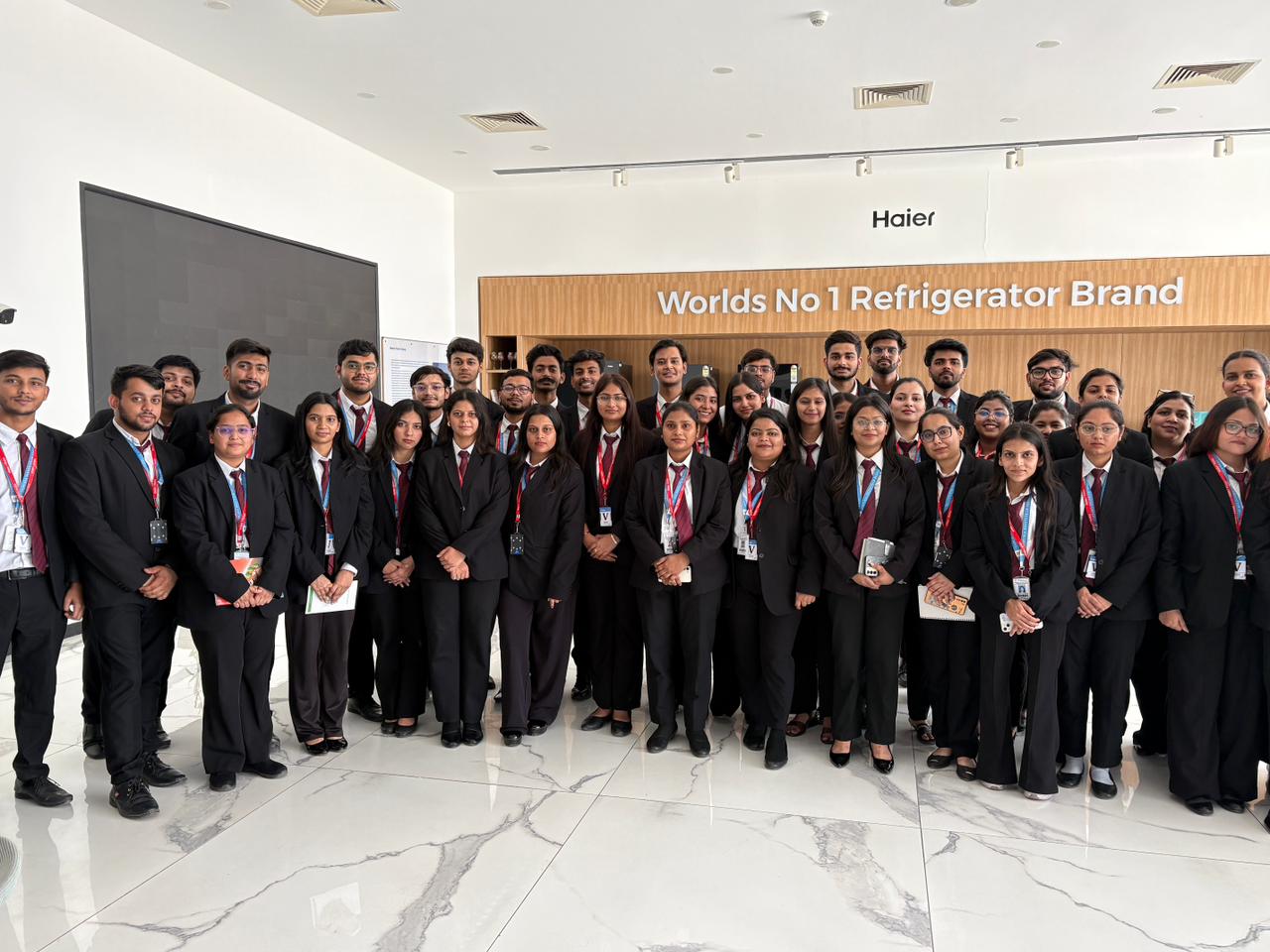
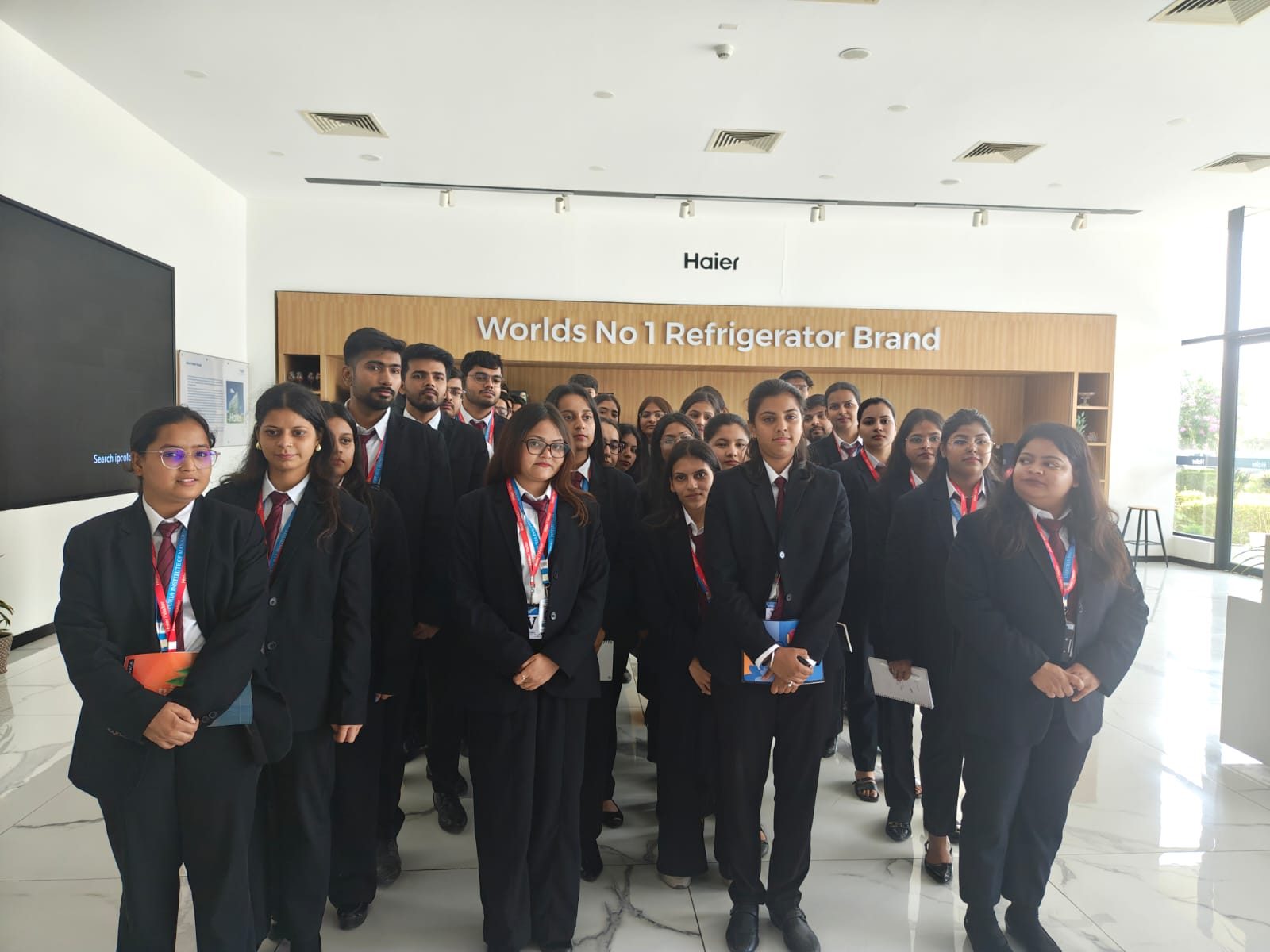
At Jaipuria Institute of Management, Ghaziabad, management education is built around practical exposure and industry interaction. Industrial visits play an important role in helping students understand how classroom concepts are applied in real business environments. Continuing this approach, MBA students of the 2025–27 batch visited Haier Appliances India Pvt. Ltd. in Greater Noida on 06 May 2026.
A total of 41 students participated in the visit under the guidance of faculty members Mr. Iti Kanchan and Ms. Rupali Bhateja. The visit provided students with first hand exposure to large scale manufacturing operations, industrial automation, and quality management practices.
Understanding Haier Appliances India
Haier Appliances India Pvt. Ltd. began its operations in India in 2003 and is headquartered in Greater Noida, Uttar Pradesh. The company is one of the leading brands in the consumer electronics and home appliances sector, offering products designed for modern households.
With operations across more than 160 countries, Haier has established itself as a globally recognized appliance manufacturer known for innovation, quality, and customer focused technology.
For management students, the visit offered a valuable opportunity to understand how a multinational company manages production, technology integration, and operational efficiency at scale.
Objective of the Industrial Visit
The industrial visit was planned with the objective of giving students practical understanding of manufacturing systems and operational workflows.
The key goals included:
- Understanding real time manufacturing processes
- Observing industrial automation and assembly lines
- Learning about quality control and testing systems
- Bridging the gap between academic concepts and practical industrial applications
This experiential approach aligns with the teaching philosophy of Jaipuria Institute of Management, Ghaziabad, where practical learning and industry exposure are considered essential parts of management education .
Process Observed During the Visit
The students were guided through various stages of the manufacturing and production cycle. Each stage offered insights into how modern industrial systems function efficiently and systematically.
Raw Material Handling
The visit began with an overview of raw material management. Materials such as sheet metal, plastic components, and electronic parts are systematically sourced and stored within the facility.
Students observed how inventory management systems are used for tracking materials and ensuring smooth production flow. This stage highlighted the importance of procurement planning and inventory control in manufacturing operations.
Sheet Metal and Injection Moulding
The next stage focused on component manufacturing using advanced industrial machinery.
Students observed injection moulding units that produce plastic components with high precision. This process demonstrated how automation and technology help maintain consistency and production efficiency.
The session also gave students a practical understanding of production engineering and process management.
Assembly Line Production
One of the most engaging parts of the visit was the assembly line section.
The plant operates with a combination of fully automated and semi automated assembly lines. Conveyor systems ensure continuous production flow, while workers perform specialized tasks at different stages.
This provided students with insights into workflow management, task specialization, and production planning. Concepts often studied in operations management became easier to understand when observed in a live industrial setting.
Quality Control and Testing
Quality assurance emerged as one of the most important aspects of the manufacturing process.
Each product undergoes strict testing procedures before reaching the market. Students observed various quality checks including performance testing, safety testing, and durability assessments.
The visit reinforced the importance of maintaining quality standards in highly competitive consumer markets.
Packaging and Dispatch
The final stage included packaging and logistics operations.
Finished products are packed using automated systems before being dispatched through a large distribution network. Students gained understanding of how logistics and supply chain management ensure timely delivery and efficient market distribution.
Technology and Innovation at Haier
One of the key highlights of the visit was Haier’s strong focus on technology driven manufacturing.
Students observed:
- High levels of industrial automation
- Use of robotics in manufacturing operations
- IoT enabled smart manufacturing systems
- Focus on energy efficient and eco friendly appliances
The company also follows backward integration practices by manufacturing several components in house. This reduces dependency on imports while improving operational efficiency and cost management.
For MBA students, this offered practical exposure to how innovation and technology contribute to competitive advantage in the manufacturing sector.
Key Learning Outcomes
The industrial visit provided several valuable takeaways for students.
Understanding Manufacturing Operations
Students gained clarity on how large scale manufacturing plants operate with coordination across departments and processes.
Exposure to Industrial Automation
The visit highlighted the growing role of automation, robotics, and smart systems in modern manufacturing environments.
Quality Assurance Knowledge
Students learned how strict quality standards are maintained through systematic testing and inspection processes.
Supply Chain and Logistics Understanding
The visit demonstrated how efficient logistics and distribution systems are critical for business success.
Innovation Driven Business Models
Students understood how companies invest in research, technology, and process optimization to remain competitive in global markets.
Bridging Theory with Real World Application
One of the biggest advantages of industrial visits is the ability to connect classroom learning with actual industrial practices.
Topics such as operations management, supply chain management, production planning, and quality control are often taught theoretically. Seeing these systems in action helps students understand their practical relevance and business impact.
At Jaipuria Institute of Management, Ghaziabad, such experiential learning opportunities are integrated into the MBA journey to develop industry ready professionals.
Student Engagement and Industry Exposure
Throughout the visit, students actively interacted with company representatives and industry professionals. These interactions provided additional insights into career opportunities, industrial challenges, and operational strategies.
The experience also helped students appreciate the importance of teamwork, efficiency, and innovation in achieving organizational success.
The industrial visit to Haier Appliances India Pvt. Ltd., Greater Noida proved to be an informative and enriching experience for MBA students of Jaipuria Institute of Management, Ghaziabad.
The visit offered practical exposure to modern manufacturing systems, automation technologies, quality assurance practices, and supply chain management. More importantly, it helped students understand how large organizations integrate technology, innovation, and operational excellence to maintain competitiveness in the global market.
Such initiatives continue to strengthen the institute’s commitment to experiential learning, ensuring that students graduate with not only academic knowledge but also real world industry understanding and practical business insights.