

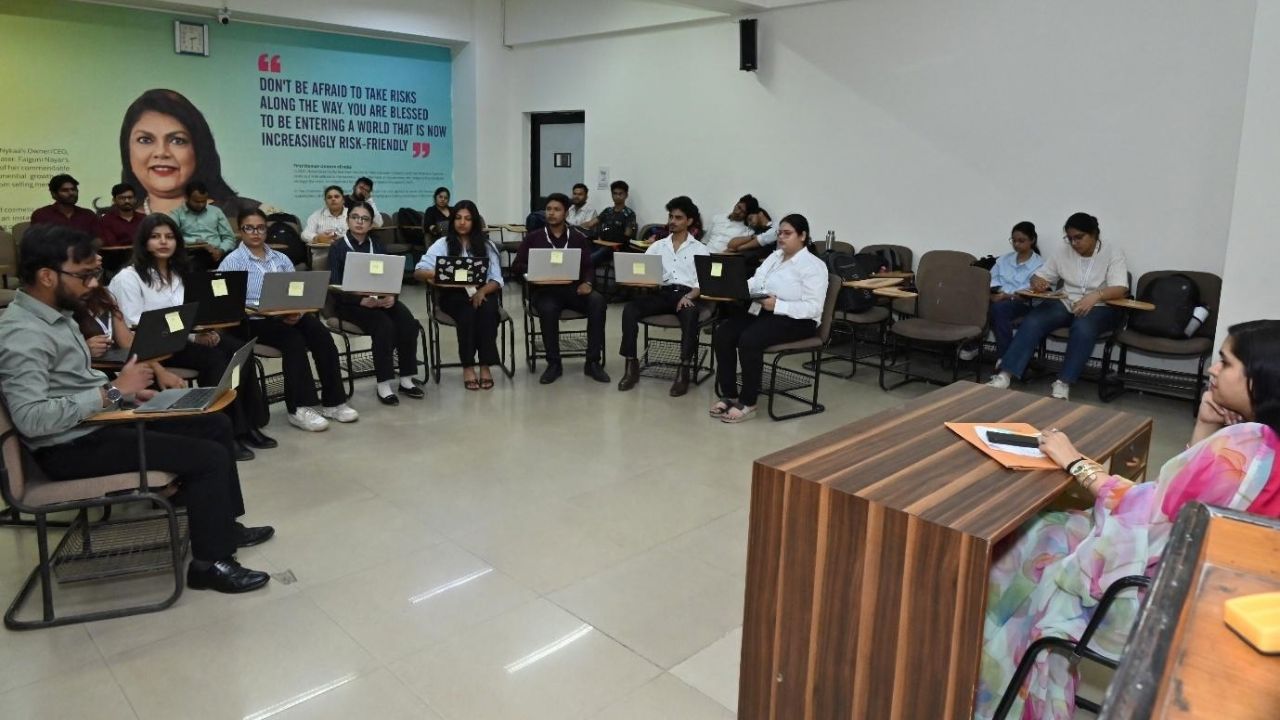
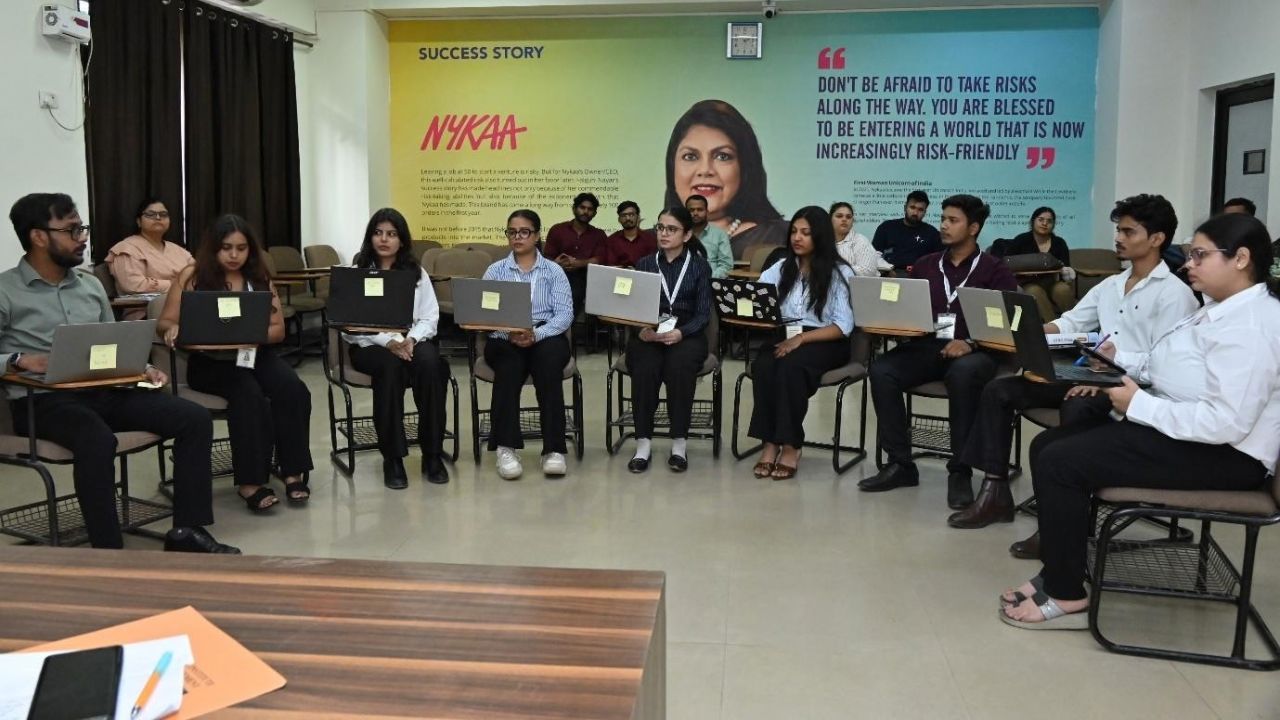
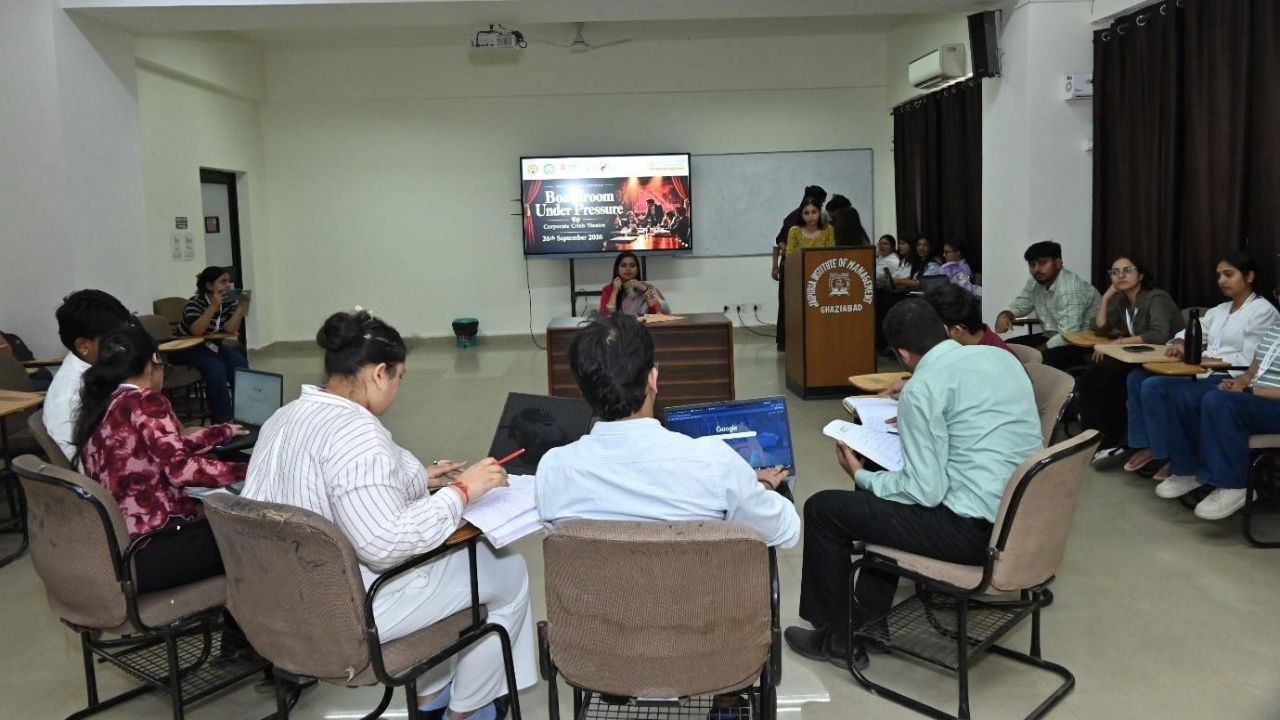
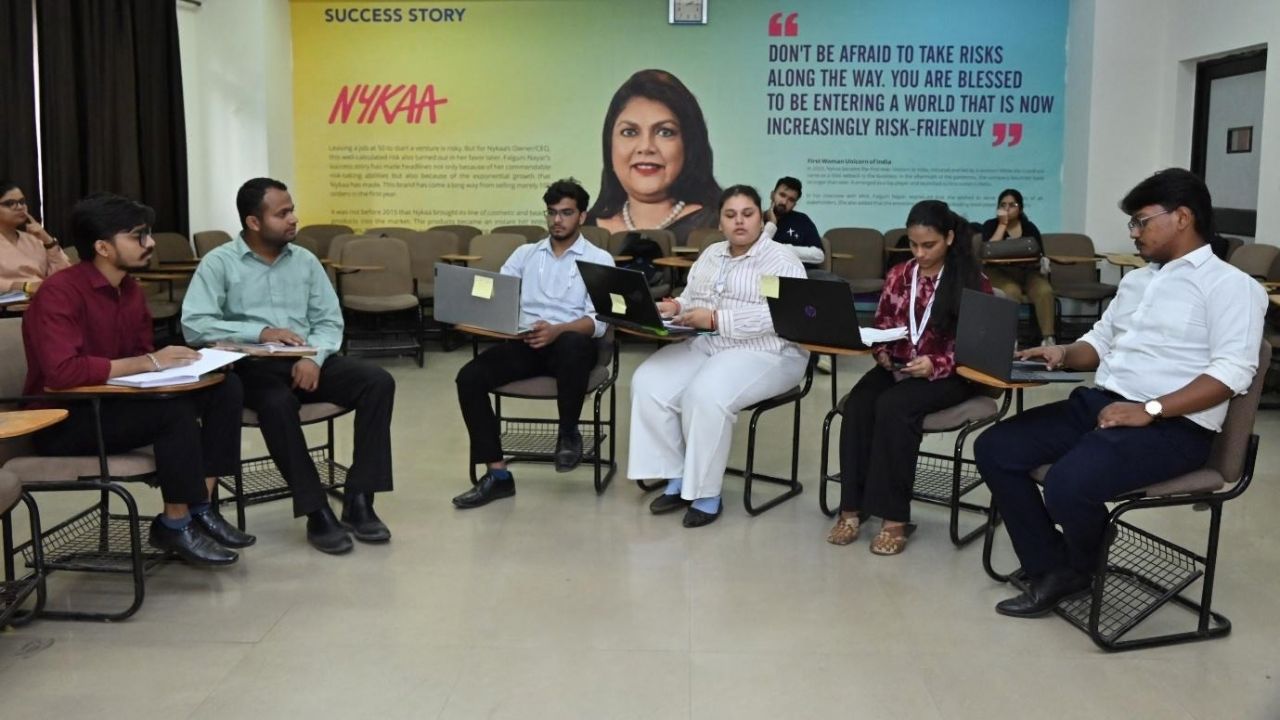
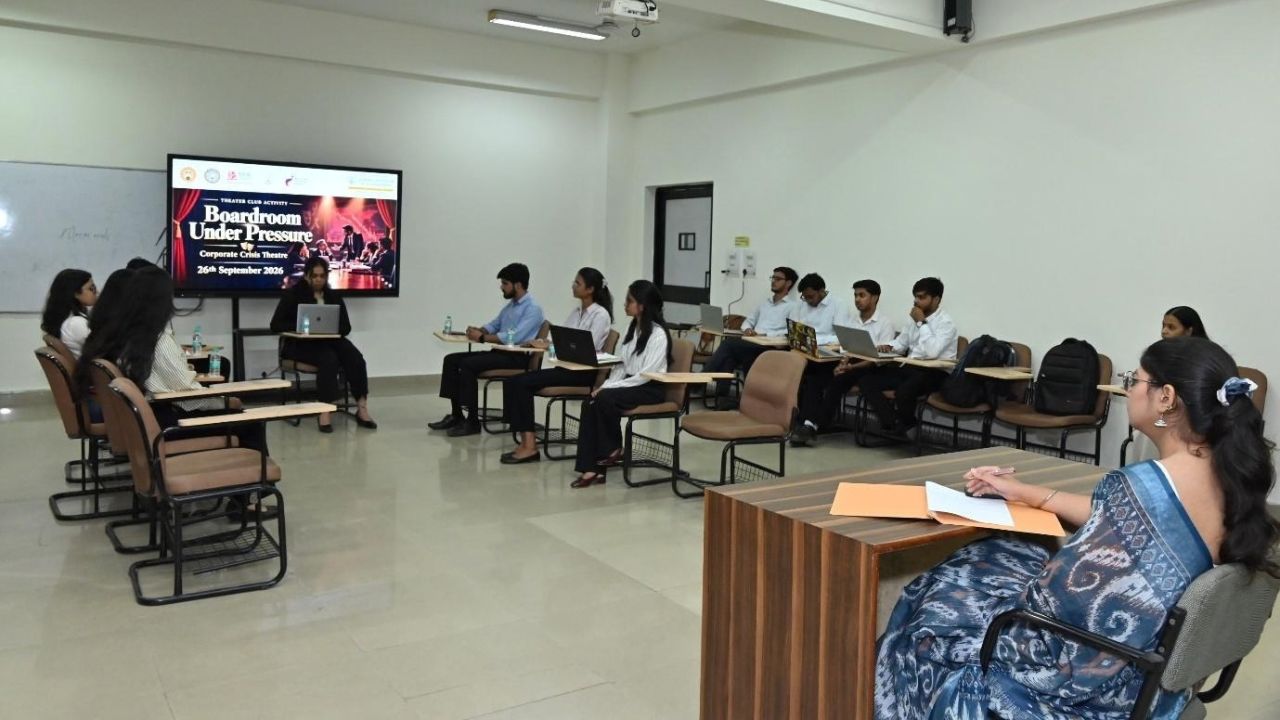
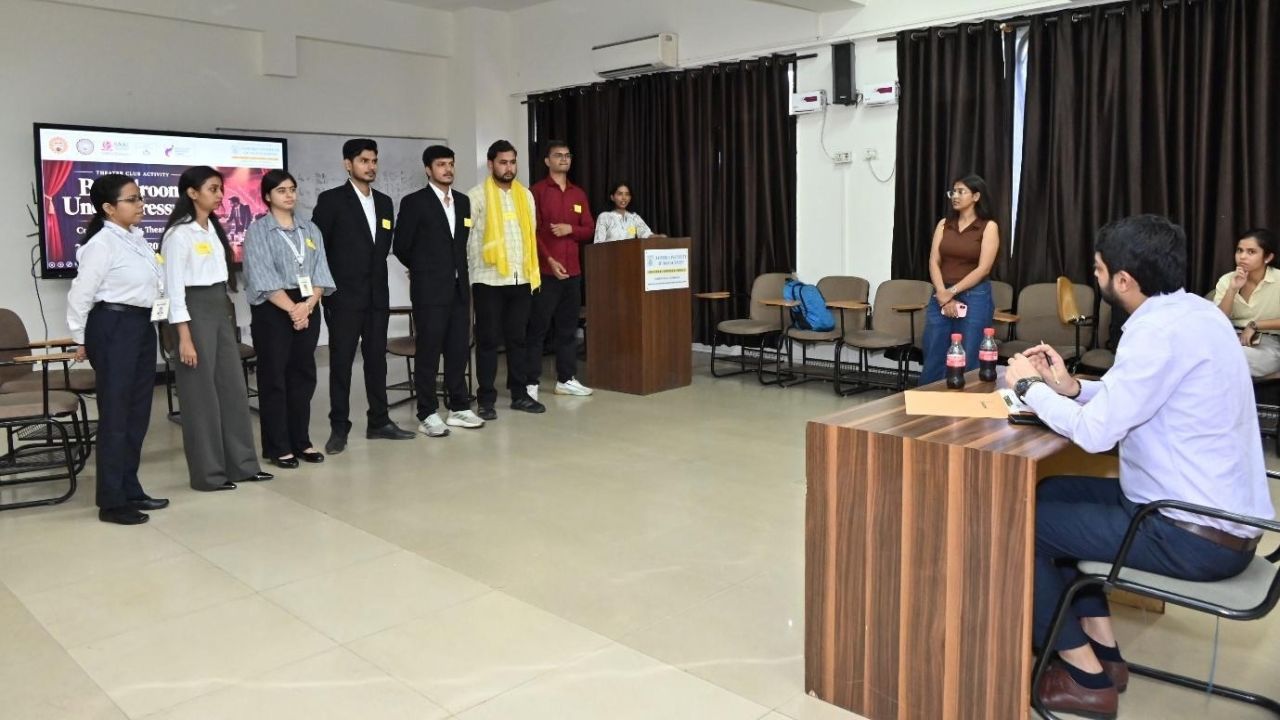
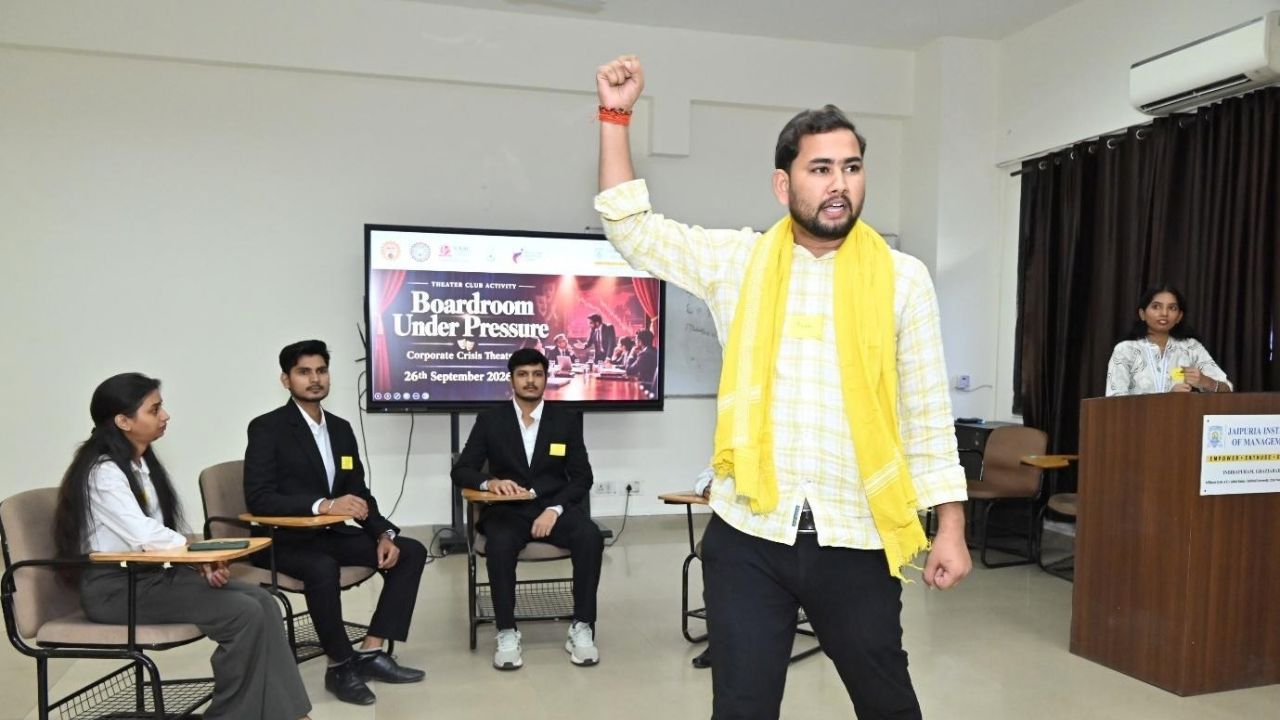
The Theatre Club at Jaipuria Institute of Management, Ghaziabad organized “Boardroom Under Pressure – Corporate Crisis Theatre” on 26 September 2026, creating an experiential learning environment where students explored real-world corporate challenges through role-play and theatrical performance.
Designed around simulated corporate boardroom meetings, the activity challenged students to step into professional roles, assess complex business situations and respond to corporate crises from the perspectives of different organisational stakeholders.
A total of 8 teams, with 6–10 members in each team, participated in the activity. Each team was given 10 minutes to present its corporate crisis scenario.
Where Theatre Meets Management Education
Boardroom Under Pressure was designed to combine the creativity of theatre with practical management learning.
Students assumed roles such as CEO, CFO, COO, HR Head, Legal Advisor, Marketing/PR Head, Board Member, Government or Regulatory Representative, Employee/Customer Representative and Media.
By taking on these responsibilities, participants had to look beyond their individual roles and understand how different stakeholders respond when an organisation faces a critical business situation.
The boardroom format encouraged students to analyse problems, consider competing stakeholder expectations and work towards appropriate business decisions under pressure.
Exploring Real-World Corporate Challenges
Each participating team presented a scenario based on a real company case involving challenging corporate situations.
The performances explored areas such as corporate crises, ethical dilemmas, product or service failures, governance concerns, reputational challenges and strategic decision-making.
Rather than relying only on scripted dialogue, students were encouraged to understand their assigned characters and respond according to the responsibilities and perspectives of their respective organisational roles.
This created a more realistic simulation of how corporate teams may need to communicate, negotiate and make decisions when dealing with complex situations.
Developing Crisis Management and Decision-Making Skills
The activity created an engaging corporate environment in which students could demonstrate a range of management and interpersonal capabilities.
Through the simulated boardroom discussions, participants applied communication, teamwork, leadership, negotiation, problem-solving, decision-making and crisis-management skills.
The performances also enabled students to connect theoretical management concepts with practical business situations while strengthening their confidence in public speaking and professional role-playing.
8 Teams Take on the Boardroom Challenge
The participation of 8 teams brought diverse perspectives and approaches to the activity. Students demonstrated enthusiasm and creativity while portraying their assigned characters and navigating the complexities of their respective corporate scenarios.
Each performance required participants to understand not only the immediate business problem but also the interests of customers, employees, management, regulators, communities, media and other stakeholders.
This approach encouraged students to examine corporate decision-making from multiple perspectives.
Ola Electric and Coca-Cola Teams Share First Prize
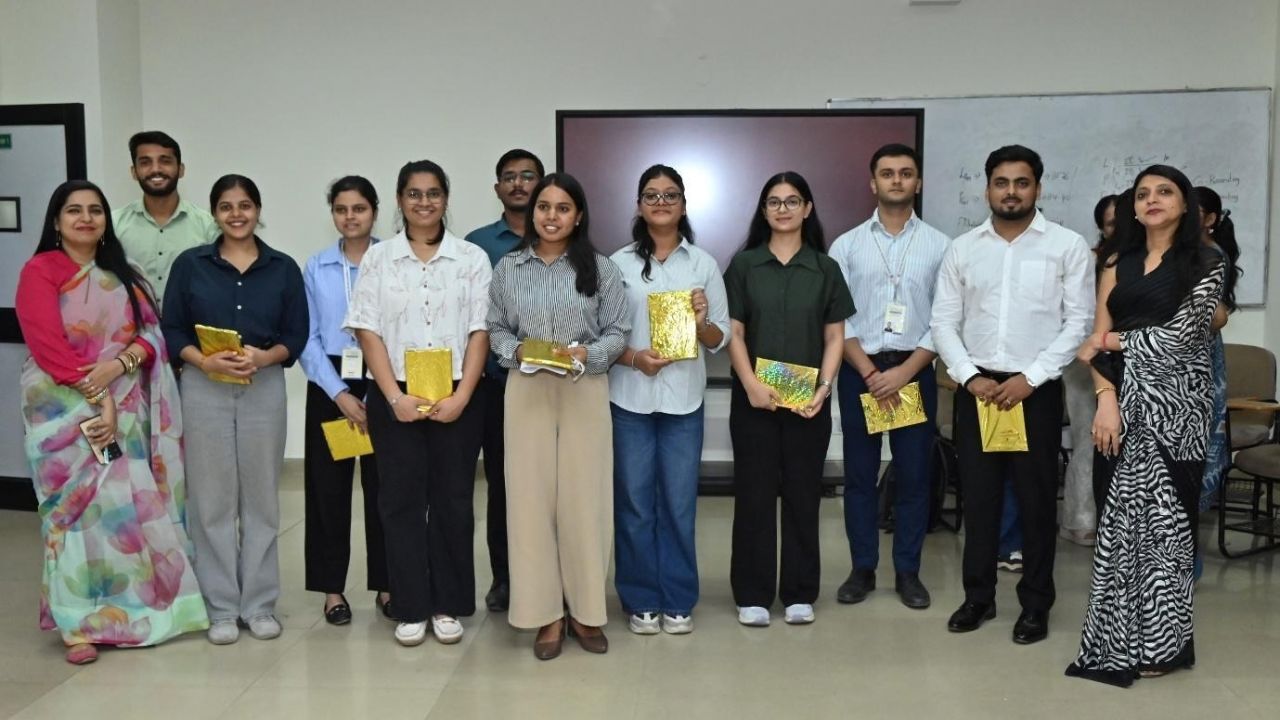
The 1st Prize was jointly awarded to two teams for their performance, teamwork, communication, role portrayal and handling of their respective corporate scenarios.
The team comprising Shivam Mishra, Shaghil, Vaibhravi, Shruti, Yash, Shubham Sharma, Sanskriti, Yuvika and Tanisha presented a role-play based on Ola Electric. Their scenario focused on declining growth and customer trust arising from service issues, product concerns and negative social-media publicity.
The performance explored the need for effective service improvement and crisis communication to rebuild customer confidence and strengthen brand image.
Sharing the first prize was the team comprising Divyanshu Mishra, Ananya, Dipu, Alok, Garima, Kameshwar, Ayushi Mehrishi and Aditi, whose performance was based on Coca-Cola.
Their scenario portrayed protests by local villagers and farmers over alleged groundwater depletion and waste disposal near the company’s bottling factory. The performance explored the complexities surrounding business operations, environmental concerns and the interests of the local community.
McDonald’s Crisis Scenario Secures Second Prize
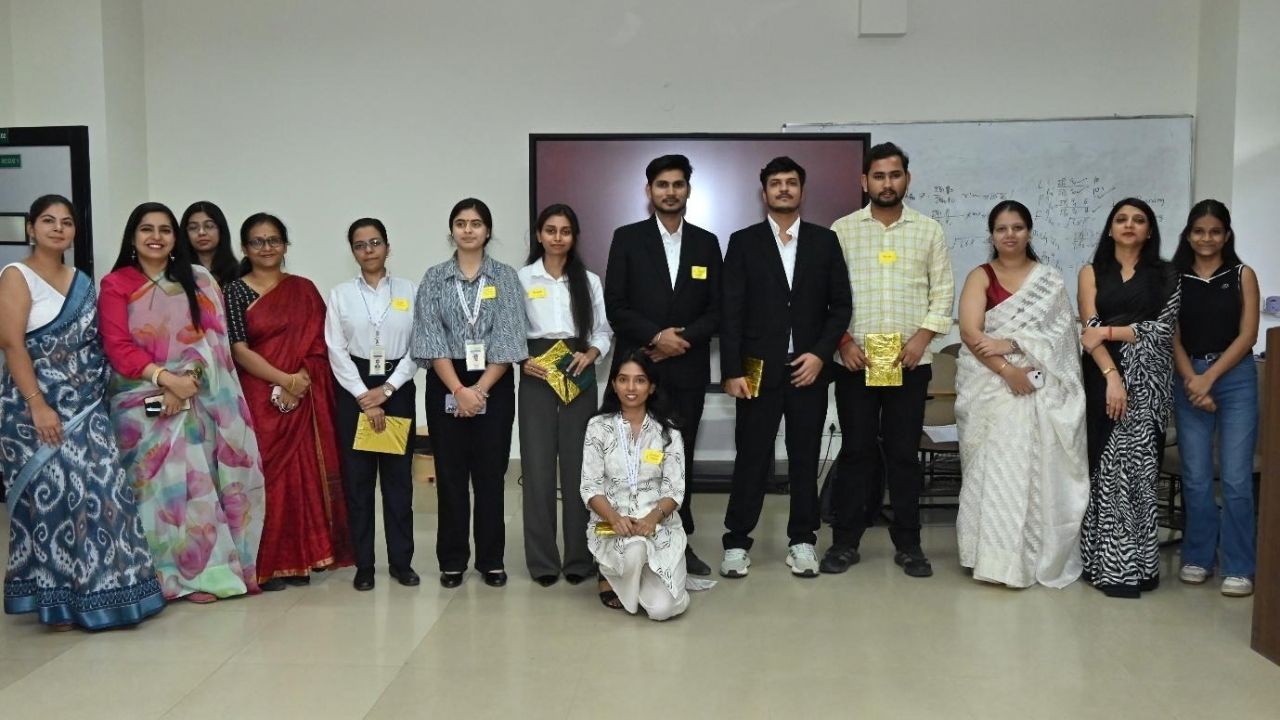
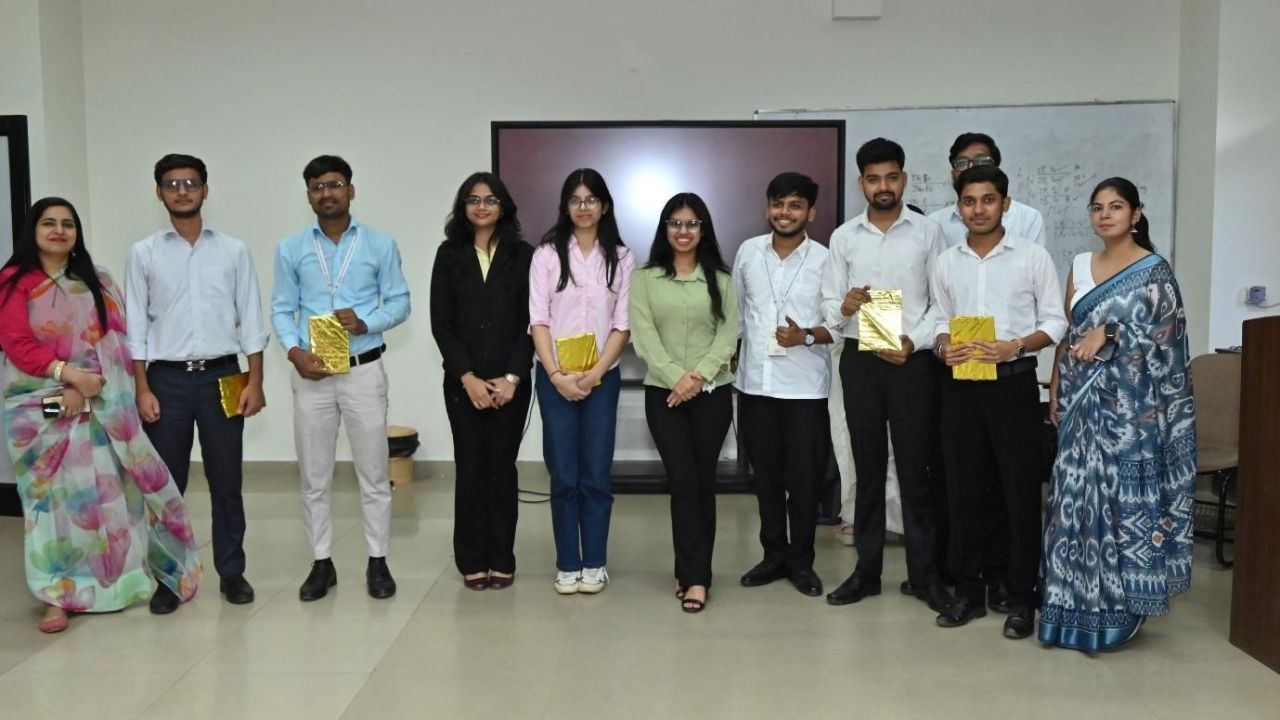
The 2nd Prize was awarded to Madhvi, Aditya, Amrit, Franny, Rahul, Dipu, Bhumika, Niharika, Manik and Ansh for their role-play based on McDonald’s.
The team depicted a hygiene complaint at an outlet that escalated into a viral social-media and regulatory crisis.
Through their performance, the students explored the importance of crisis response, addressing customer concerns, regulatory compliance and reputation management when an organisation faces heightened public scrutiny.
Connecting Classroom Concepts with Corporate Reality
One of the key strengths of Boardroom Under Pressure was its ability to take management learning beyond conventional classroom discussion.
Students were required to interpret situations, understand organisational roles, communicate different viewpoints and respond to evolving corporate challenges.
The activity demonstrated how experiential learning can enable MBA students to examine business situations through the lens of multiple stakeholders while simultaneously developing professional and interpersonal capabilities.
Building Professional Skills Through Experiential Learning
Boardroom Under Pressure – Corporate Crisis Theatre successfully combined theatrical expression with management education at Jaipuria Institute of Management, Ghaziabad.
Through corporate role-play and simulated boardroom discussions, students gained an opportunity to understand the complexities of decision-making under pressure while strengthening their ability to communicate, collaborate, negotiate, lead and respond to challenging business situations.
The initiative reflected the Theatre Club’s focus on using creative and experiential activities to develop students’ professional and interpersonal skills while making management learning more engaging and application-oriented.