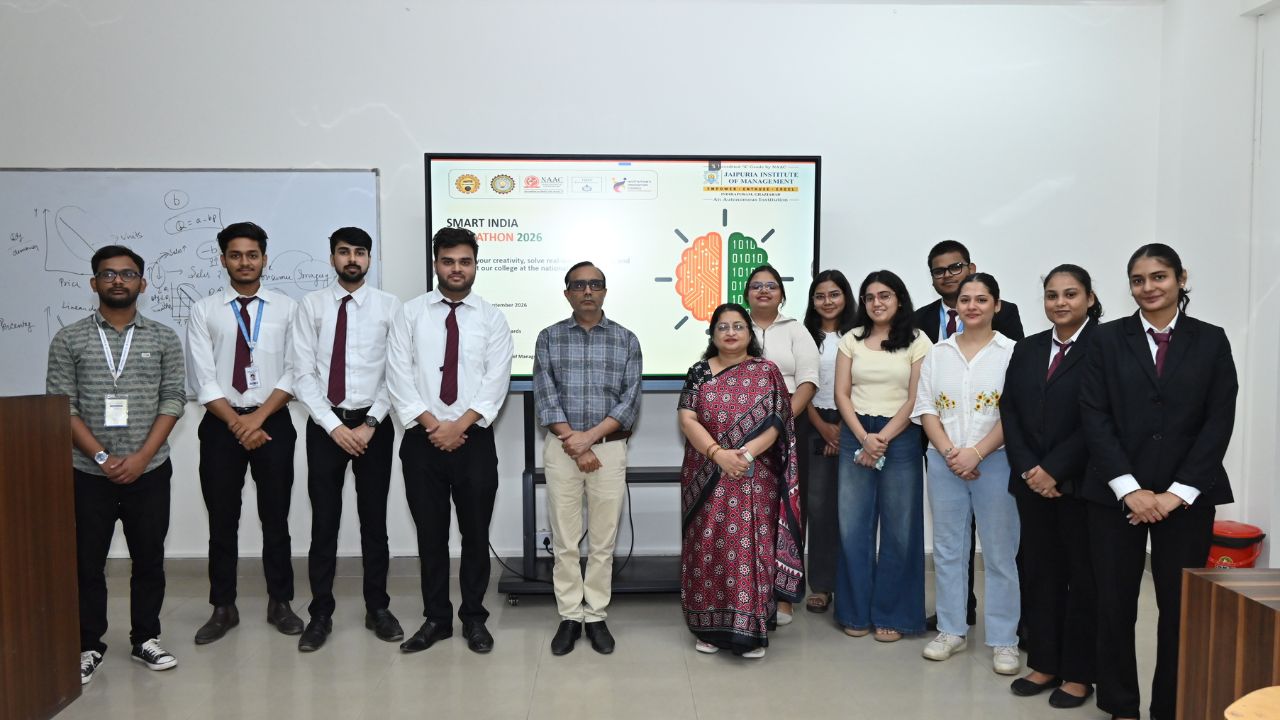
Jaipuria Institute of Management, Ghaziabad organized the Internal Smart India Hackathon (SIH) 2026 on 12 September 2026 from 4:00 PM to 5:00 PM in Room No. 216. The one-hour internal hackathon provided students with a platform to address real-world problem statements through innovative and technology-driven solutions.
A total of 12 students across two teams participated in the competition. Both teams presented solutions based on problem statements provided by departments and ministries of the Government of India for Smart India Hackathon 2026.
The event focused on developing students’ problem-solving, creativity, technical thinking, collaboration and presentation skills, while evaluating their ideas for feasibility, impact, sustainability and scalability.
Connecting Students with Real-World Problem Statements
The Internal Smart India Hackathon 2026 encouraged students to move beyond theoretical learning and examine challenges that require practical, technology-enabled solutions.
The participating teams worked on two distinct problem statements, covering areas such as AI-enabled learning and capacity building and intelligent freight forecasting.
Through the competition, students had an opportunity to analyse complex challenges, develop structured solutions and demonstrate how technology can be applied to address practical requirements.
Team 1: AI-Enabled Learning and Capacity Building
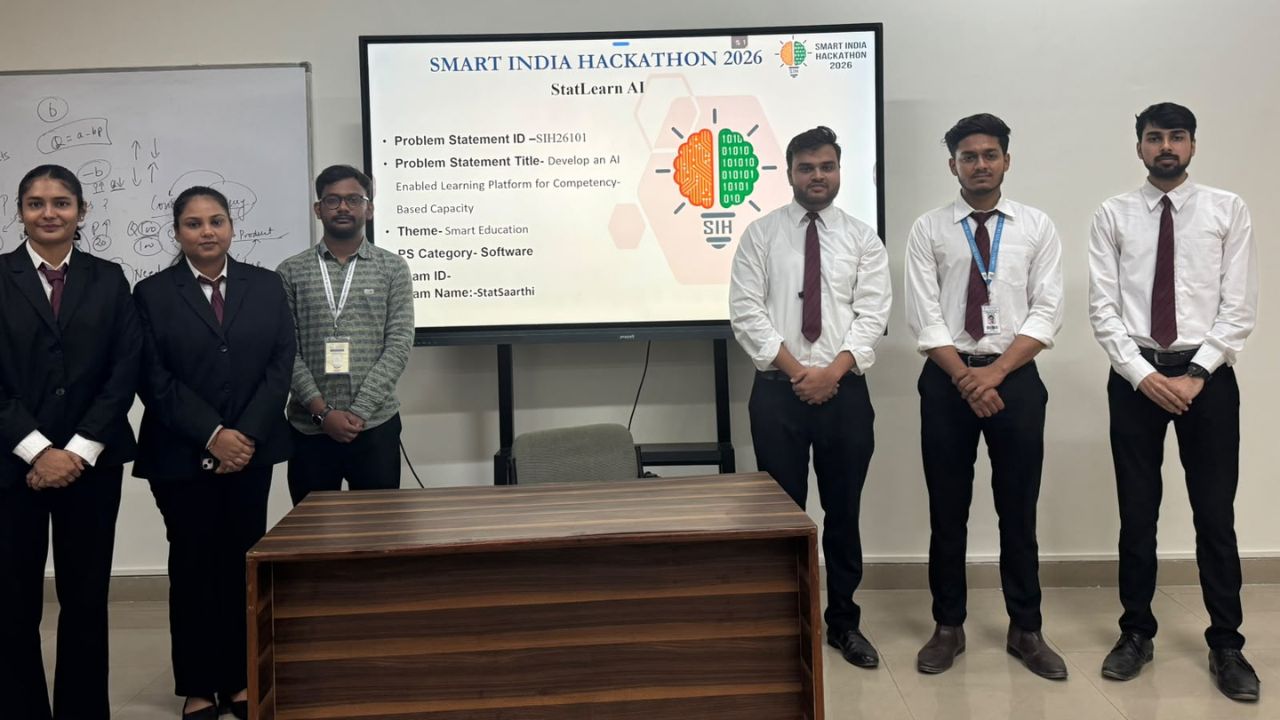
The first team was led by Sanyam Gemini, along with team members Vinay, Abhay Singh, Aanchal Saxena, Nandani Kulshreshtha and Pranjal Bhardwaj.
The team worked on Problem Statement ID SIH26101, provided by MoSPI.
The challenge focused on developing an AI-enabled learning platform capable of identifying competency gaps and recommending personalized training through integration with the iGOT Karmayogi ecosystem.
The proposed platform was also expected to generate quizzes and Multiple Choice Questions (MCQs) from uploaded learning materials, with the broader objective of strengthening capacity building in India’s Official Statistical System.
The problem statement provided students with an opportunity to explore the practical application of Artificial Intelligence, personalized learning and automated assessment within a large-scale learning ecosystem.
Team 2: Intelligent Freight Forecasting
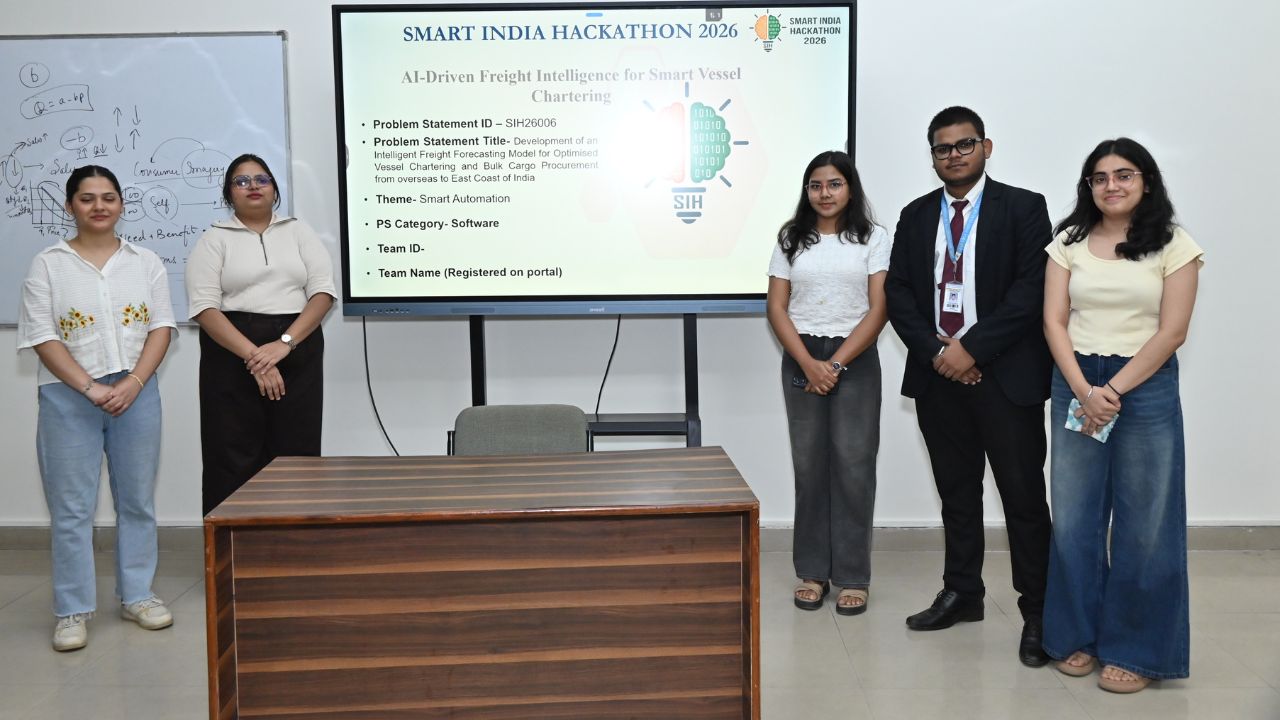
The second participating team was led by Vineet Srivastav, with Shivan, Sunandani, Ritika Goel, Jhansi and Riya as team members.
The team addressed Problem Statement ID SIH26006, provided by the Ministry of Steel.
Their challenge involved the development of an Intelligent Freight Forecasting Model for optimized vessel chartering and bulk cargo procurement from overseas to the East Coast of India.
The problem statement required students to consider how intelligent forecasting and technology-driven decision-making could contribute to more effective freight planning, vessel chartering and bulk cargo procurement.
Evaluation Based on Innovation, Feasibility and Impact
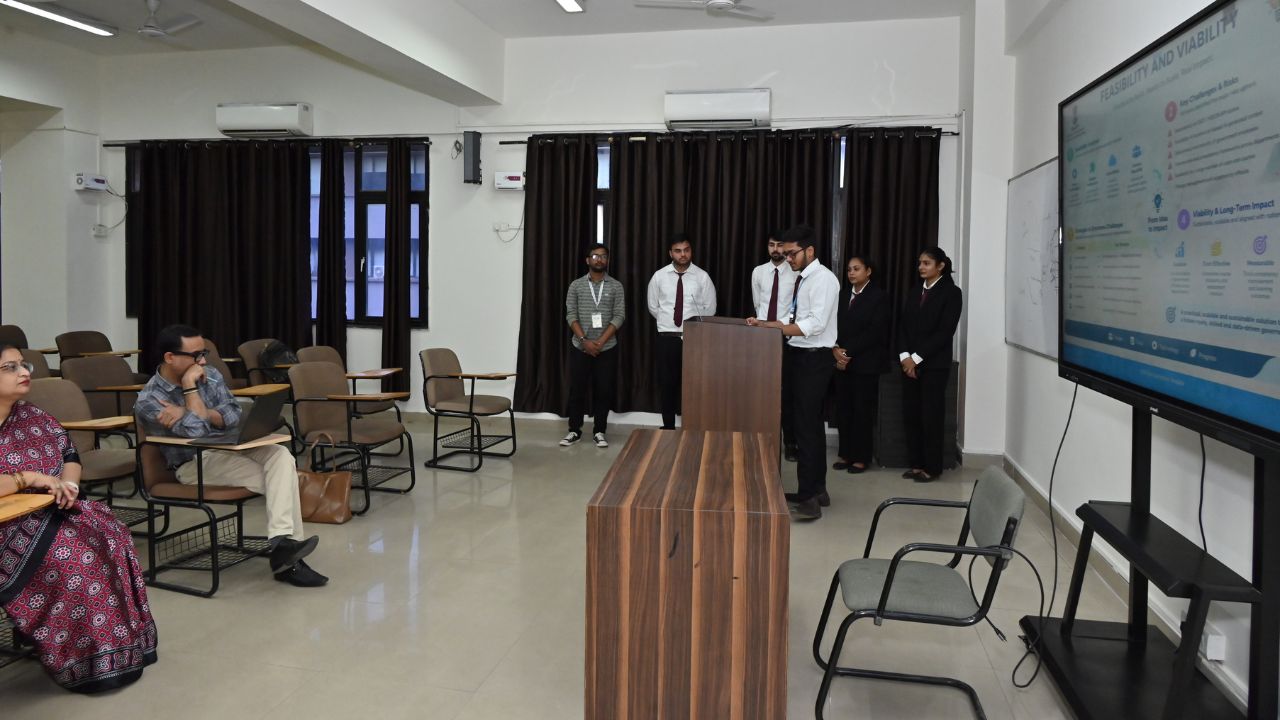
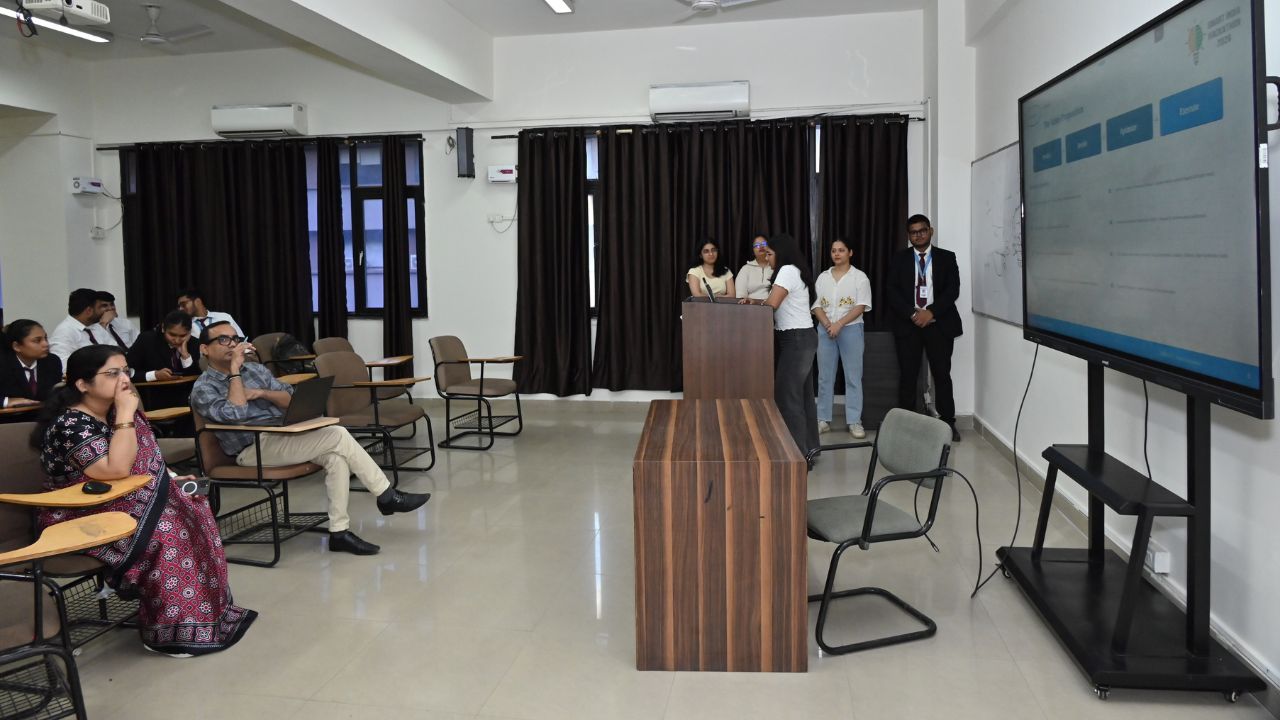
The Internal Smart India Hackathon 2026 was judged by Professor Ajay Tripathi and Dr. Smita Agarwal.
The participating teams were evaluated across five key criteria:
- Novelty & Innovation: 20%
- Problem Understanding & Solution Clarity: 20%
- Technical Feasibility & Practicability: 25%
- Impact, Sustainability & Scalability: 20%
- Presentation, User Experience & Future Potential: 15%
The evaluation framework ensured that students were assessed not only on the originality of their ideas but also on whether their proposed solutions were practical, scalable and capable of creating meaningful impact.
Both Teams Selected for National-Level Nomination
A significant outcome of the Internal Smart India Hackathon 2026 was the selection of both participating teams for nomination to the national-level SIH 2026 competition.
The selection reflected the potential demonstrated by the students in understanding the given challenges and developing technology-driven approaches to address them.
The next stage will provide the nominated teams with an opportunity to further develop and refine their ideas as they progress towards the national-level competition.
Developing Problem-Solving and Innovation Skills
Participation in the hackathon enabled students to gain practical experience in analysing real-world problems and developing innovative, user-centric solutions.
Students were encouraged to apply technology alongside structured problem-solving approaches to design solutions that could be feasible, practical and scalable.
The event also strengthened teamwork and collaborative thinking as students worked in teams to interpret their respective problem statements, develop solutions and communicate their ideas within a competitive environment.
Strengthening Presentation and Communication Skills
Beyond technical and analytical capabilities, the competition provided students with an opportunity to strengthen their presentation and communication skills.
Participants were required to demonstrate the innovation, feasibility, impact, sustainability and future potential of their proposed solutions before the judges.
This experience encouraged students to communicate complex ideas clearly while developing confidence in presenting technology-driven business and problem-solving propositions.
Promoting Innovation-Driven Learning at Jaipuria
The Internal Smart India Hackathon 2026 at Jaipuria Institute of Management, Ghaziabad reflected the institute’s focus on connecting management education with innovation, technology and real-world problem-solving.
By engaging students with challenges originating from government departments and ministries, the event provided a practical platform for applying creativity, analytical thinking and technology to contemporary problems.
With both teams selected for nomination to the national-level competition, the event marked an encouraging step in promoting a culture of innovation, collaboration and solution-oriented thinking among students.