From Idea to Publication: Paper Development Through AI Tools
15–19 June 2026
Day 4: 18 June 2026
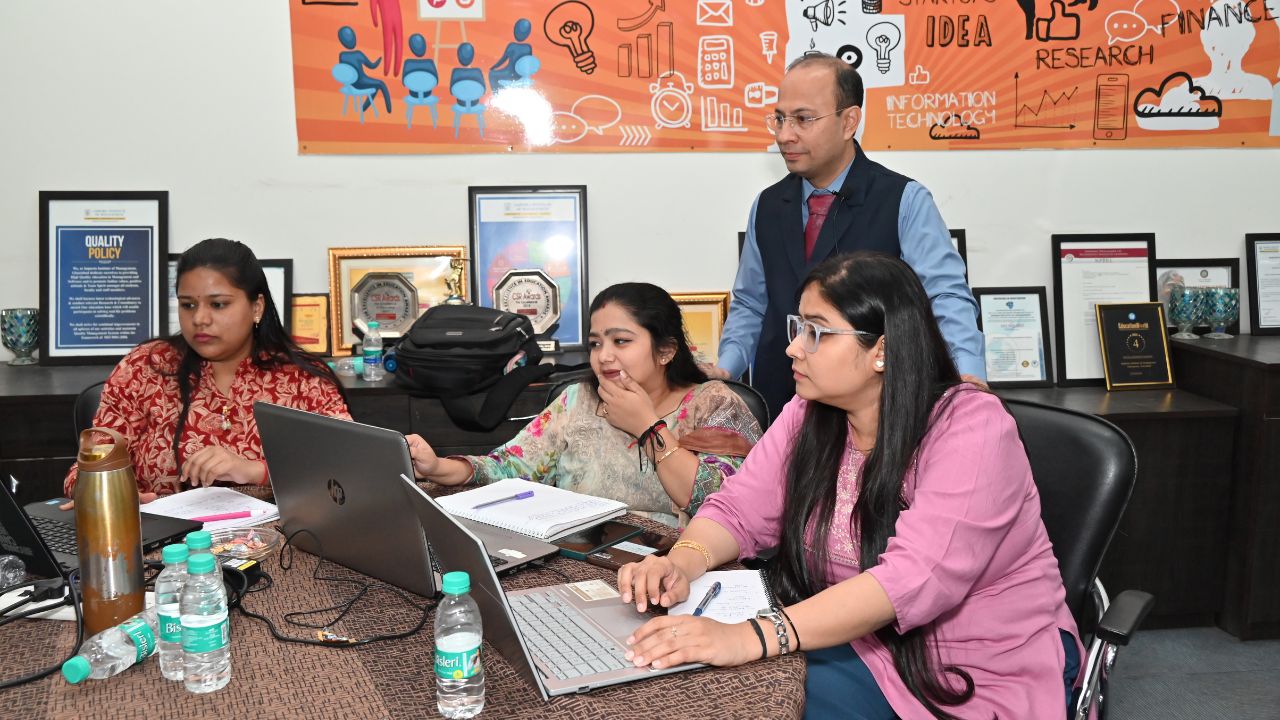
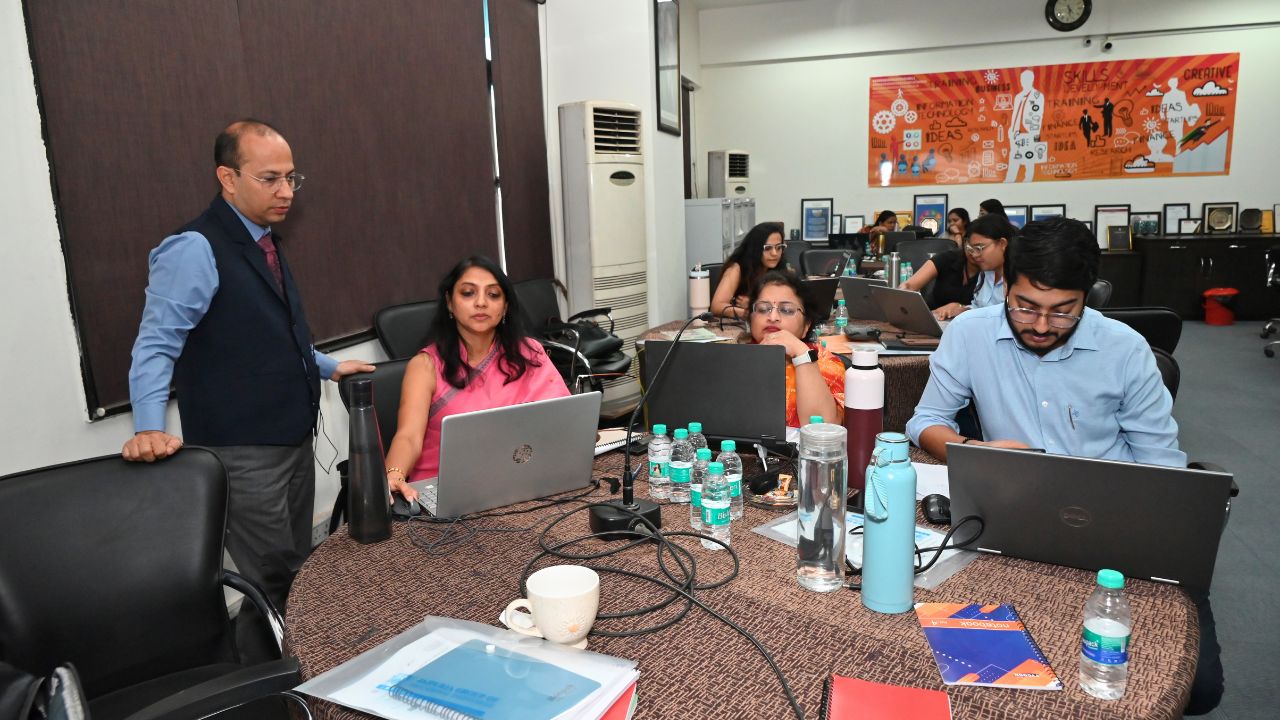
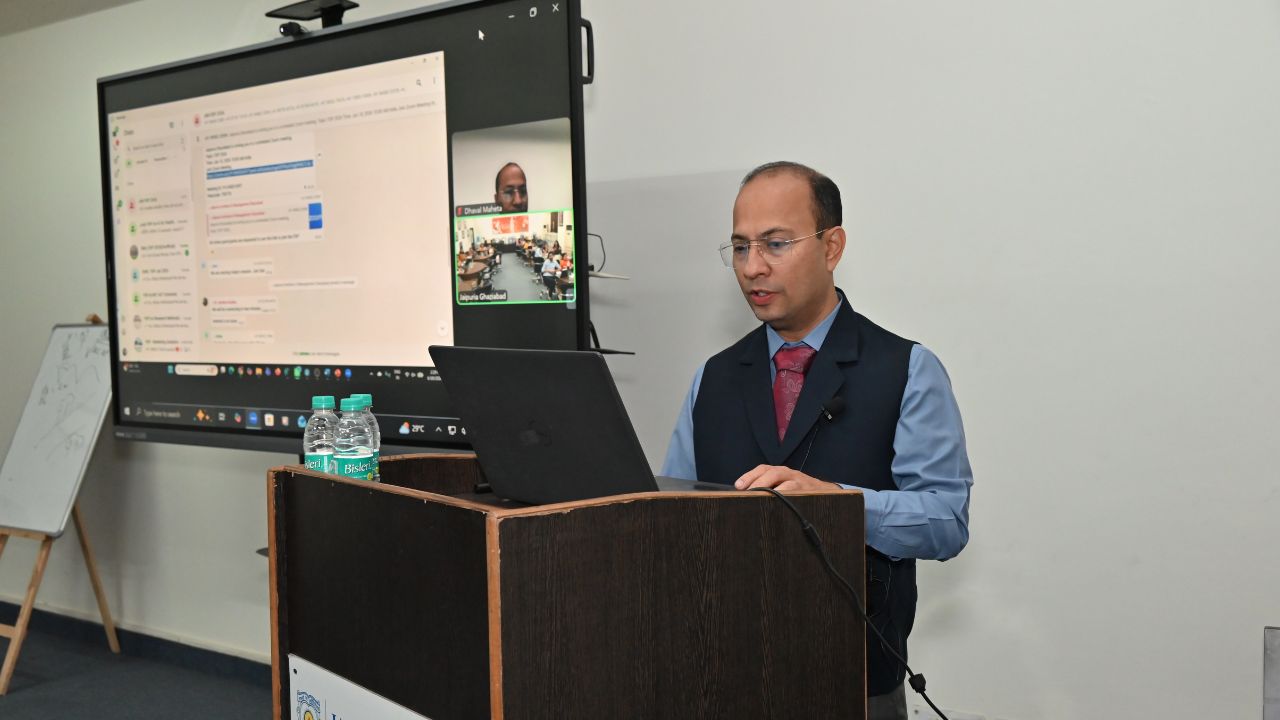
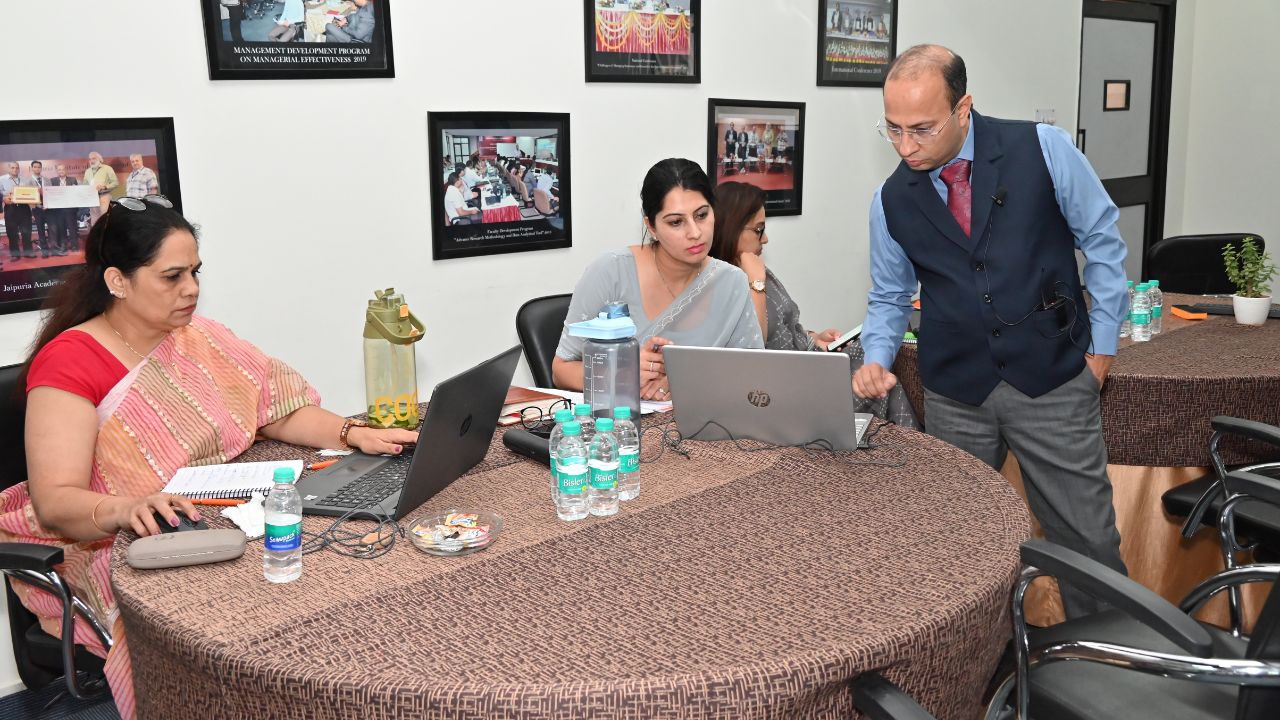
The fourth day of the Faculty Development Program (FDP) on “From Idea to Publication: Paper Development Through AI Tools” was conducted successfully on 18 June 2026 at Jaipuria Institute of Management, Ghaziabad. The sessions were facilitated by Prof. Dhaval Mehta, Veer Narmad South Gujarat University (VNSGU), Surat, who continued to engage participants through his practical, interactive, and application-oriented teaching approach.
The day commenced with a quick revision of the concepts covered during the previous sessions, helping participants strengthen their understanding of SmartPLS and structural equation modelling. Prof. Mehta revisited key concepts and clarified participant queries before moving to advanced analytical techniques.
The sessions focused extensively on Mediation Analysis and Moderation Analysis, covering their conceptual foundations, types, interpretation, and practical applications in research. Participants gained a clear understanding of the differences between mediation and moderation, the situations in which each technique is appropriate, and the procedures for conducting these analyses using SmartPLS-4. Further, the resource person discussed Reflective and Formative Measurement Models, highlighting their conceptual distinctions, evaluation criteria, and implications for theory development and model specification. Through practical demonstrations, participants learned how to assess and validate both types of constructs within SmartPLS.
Another major component of the day’s training was the discussion on Higher-Order and Lower-Order Construct Analysis. Prof. Mehta explained different approaches to modelling hierarchical constructs and demonstrated their implementation in SmartPLS. Participants were introduced to practical examples that helped simplify these advanced concepts and improve their understanding of complex model structures. The sessions also addressed common issues encountered during model assessment and data analysis. Participants were guided through various remedial measures and corrective actions that can be employed when models fail to meet the required statistical thresholds. The practical orientation of these discussions helped participants develop problem-solving skills for real research scenarios.
In the latter part of the day, Prof. Mehta shifted the focus towards the role of Artificial Intelligence in research. He demonstrated how AI-powered tools can be integrated across different stages of the research process, including ideation, literature review, data analysis, manuscript development, and publication support. Importantly, he emphasized the responsible and optimal use of AI tools, highlighting the need to maintain academic integrity, originality, methodological rigor, and research quality while leveraging technological advancements. Throughout the sessions, Prof. Mehta continued to simplify complex methodological concepts through real-life illustrations, practical examples, and interactive discussions. The participants actively engaged in the sessions, raising questions and relating the concepts to their own research projects.
The fourth day concluded on a highly productive and enriching note. Both online and offline participants appreciated the efforts of the resource person and commended the clarity, depth, and practical relevance of the sessions. The participants particularly valued the balanced integration of advanced research methodologies and AI-enabled research practices, which significantly enhanced their understanding of contemporary research workflows and publication requirements.